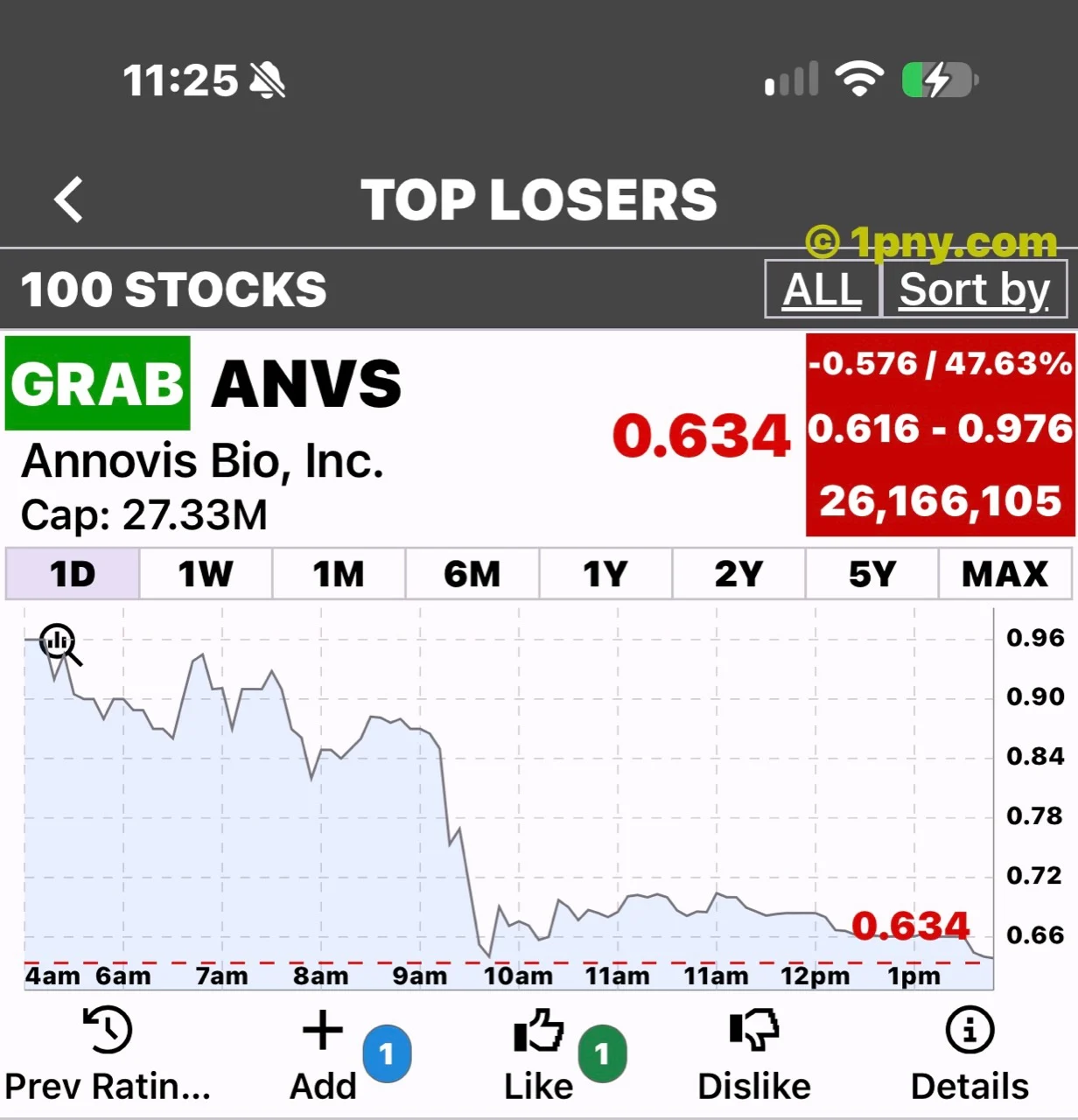
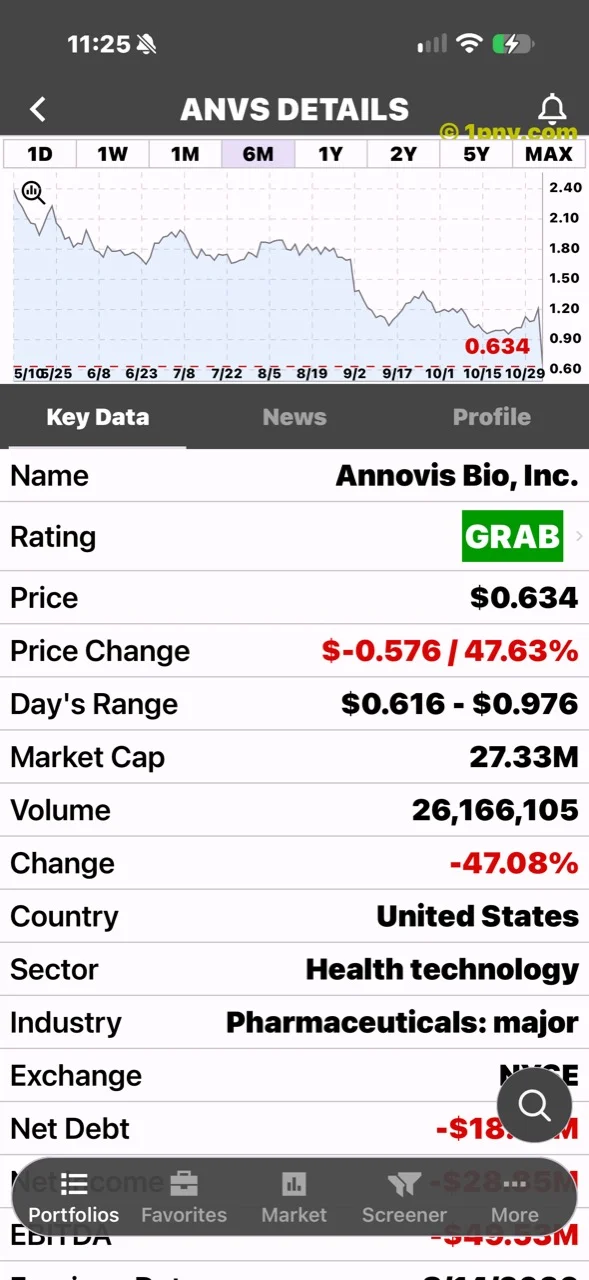
Annovis Bio's supplied PennyGems snapshot shows ANVS at $0.634, down 47.63%, following the pricing of a $21 million public offering. The financing offers additional capital while introducing substantial new shares and warrants. That ownership tradeoff is the clearest immediate development to examine alongside the company's recent NYSE compliance notice.
The displayed price and percentage are historical readings from the supplied screen, not live quotations. The offering helps explain investor concern, but the public disclosures do not establish the motivation of every seller.
The offering raises cash with an ownership cost
The November 5 announcement describes 19 million common shares and pre-funded warrants for up to 2 million shares, accompanied by warrants covering another 21 million shares. The common-share-and-warrant package costs $1.00; the pre-funded package costs $0.9999, with a $0.0001 exercise price. The accompanying warrants have a $1.00 exercise price and a five-year term. [Offering announcement](https://www.stocktitan.net/news/ANVS/annovis-announces-pricing-of-21-0-million-public-kj2hluz6vrqp.html).
The expected $21 million gross proceeds exclude possible proceeds from those accompanying warrants. Closing was anticipated around November 6, subject to customary conditions. [Company release](https://www.biospace.com/press-releases/annovis-announces-pricing-of-21-0-million-public-offering).
Investors should distinguish money expected at closing from money that might arrive through future warrant exercises. Neither should be confused with operating revenue. A financing can strengthen the cash position without demonstrating that a development program has become commercially successful.
A package price is not a floor for the stock
The offering price buys a combination of securities. It is therefore misleading to compare the package directly with a common share trading alone and conclude that the stock must return to the offering price.
Pre-funded warrants and accompanying warrants also serve different functions. The former require only a small remaining payment to obtain the underlying shares, while the latter require a separate exercise payment. Treating all potential shares as already issued would overstate completed issuance; ignoring the additional rights would understate the possible future ownership change.
The practical question for existing shareholders is how much of the business they will own after the financing and any later exercises. An exact dilution percentage requires an up-to-date share count and the full transaction terms. The screenshot's market capitalization is not enough to perform that calculation reliably.
The NYSE notice adds a separate concern
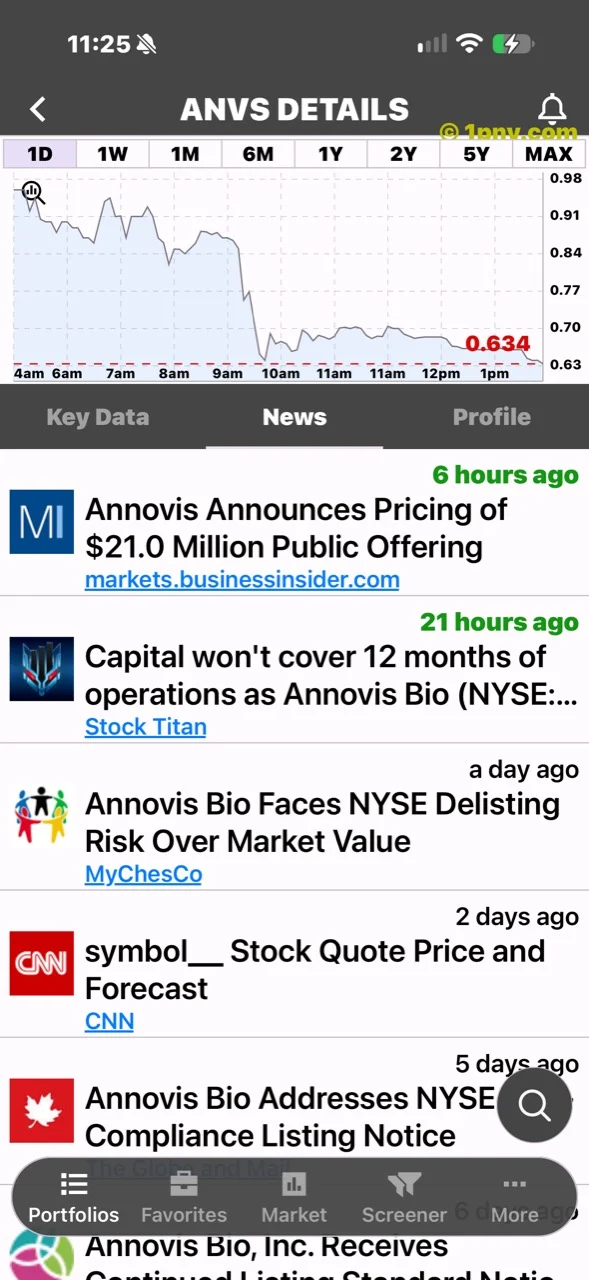
Annovis disclosed that it received an October 29 NYSE notice because its 30-trading-day average market capitalization and stockholders' equity were both below $50 million. The company said it would submit a compliance plan within 45 days, seeking to regain conformity within nine months. It also stated that the notice had no immediate effect on its listing. [SEC-filed notice](https://www.sec.gov/Archives/edgar/data/1477845/000110465926120732/tm2628596d1_ex99-1.htm).
A compliance notice is not the same as an immediate delisting. Equally, raising money does not by itself prove that the exchange has accepted a plan or confirmed restored compliance. Investors need the company's subsequent disclosures to establish the status of that process.
The app's key-data screen labels the exchange NASDAQ, while the company's contemporaneous filing identifies NYSE. This article follows the filing. Screenshots remain useful records of what the app displayed, but their labels should not override primary disclosures.
What would make the financing more valuable?
The next checkpoints are confirmation of closing, net proceeds after expenses, an updated capitalization table and management's explanation of how far the funds extend planned work. Funding provides resources; its value depends on what those resources accomplish.
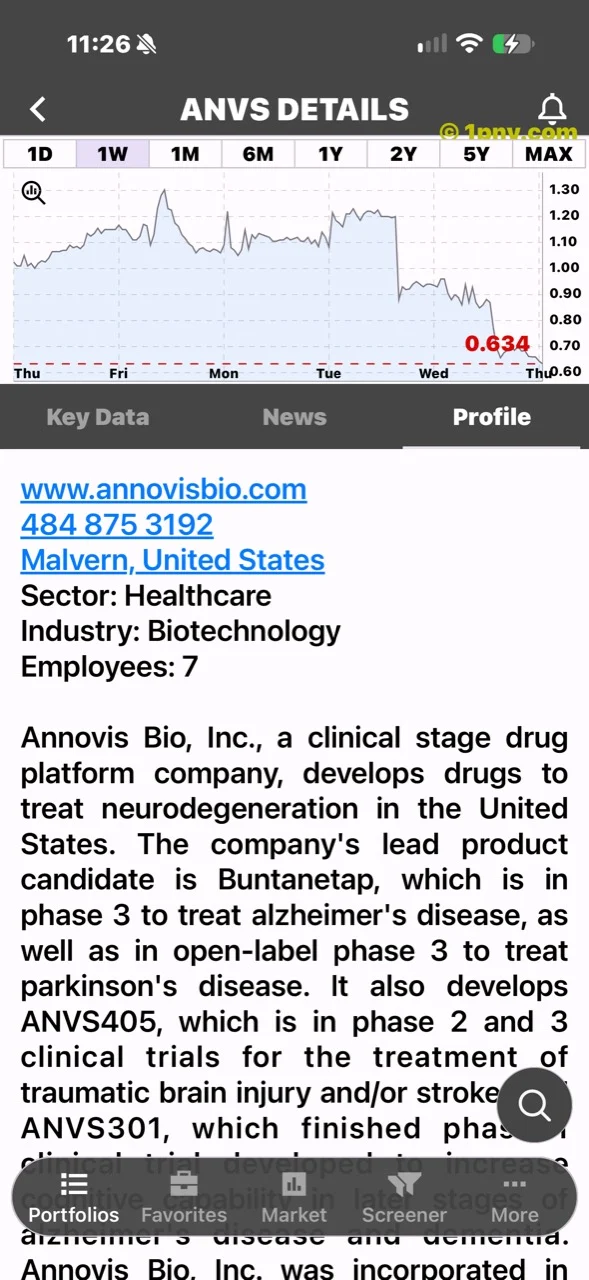
For a clinical-stage company, financing progress and clinical progress are distinct. Raising capital is not evidence that an investigational treatment works, and a falling stock is not by itself evidence that a trial failed. The announcements cited here concern financing and listing compliance, so they should not be recast as new clinical results.
A stronger investment case would require evidence that available resources support meaningful development milestones on an achievable timetable. Further financing needs, delays or unfavorable results could change that assessment. The large price decline alone cannot resolve those uncertainties or establish a bargain.
Images: PennyGems / 1pny.com. The supplied chart, key-data, news and profile screens are captured snapshots. The GRAB badge belongs to the app and is not this article's recommendation.