
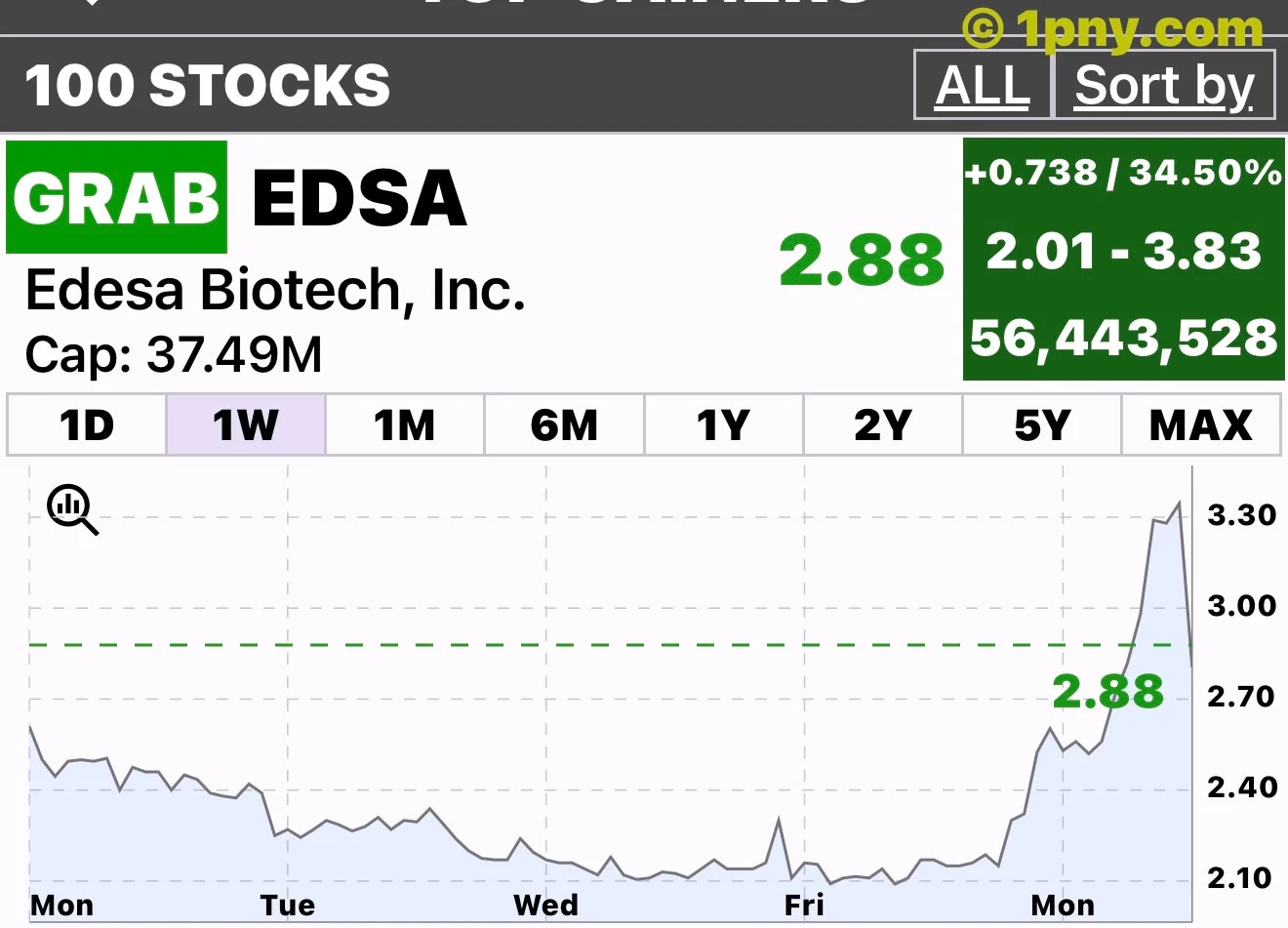
Edesa Biotech has a concrete new catalyst: a Japanese pharmaceutical partner willing to pay $12 million upfront for rights to its experimental respiratory drug. The supplied Penny Gems screen shows EDSA up +34.11% at $2.87, but a retreat from the day's high makes the next question harder: can the business progress sustain the stock's rebound?
A sharp rally with a sharp pullback
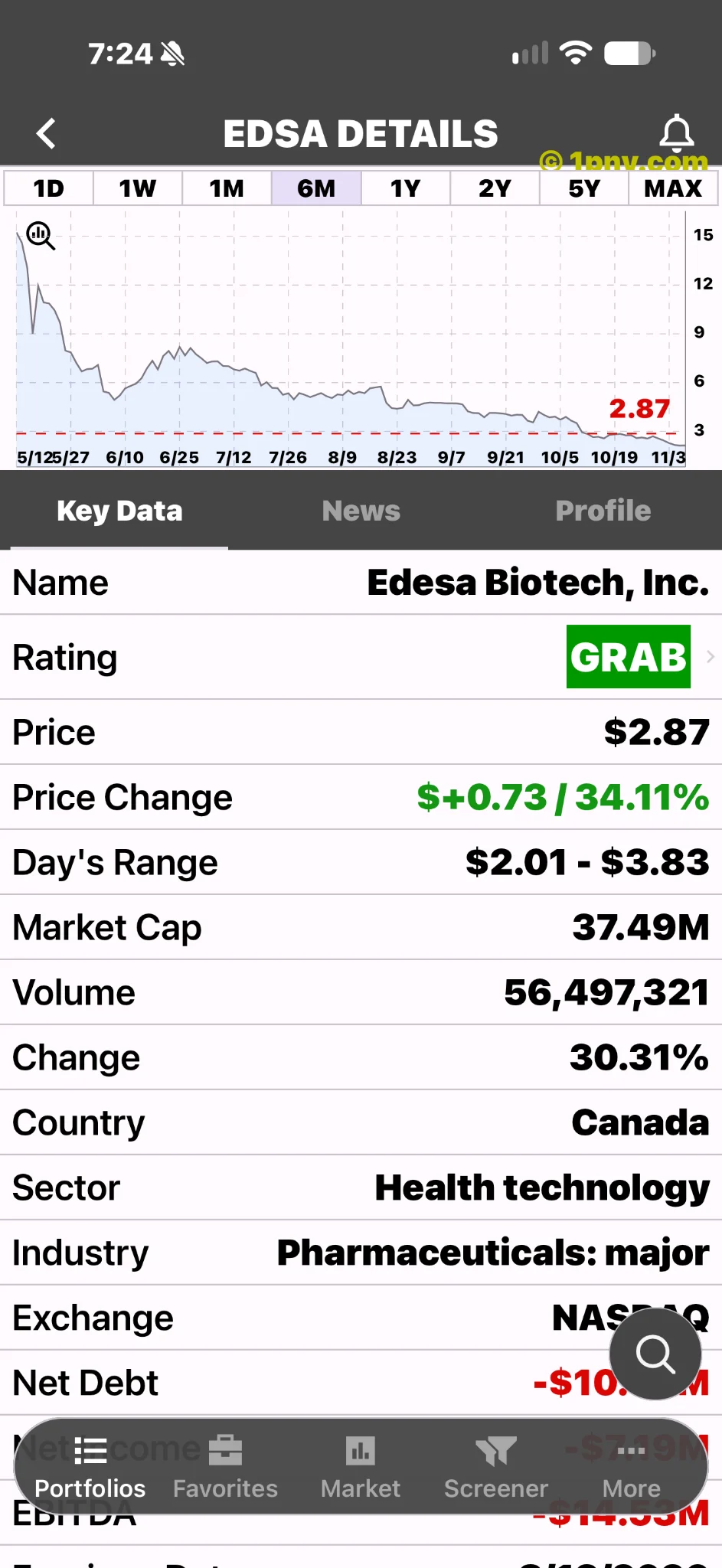
The detailed screenshot shows a $0.73 gain, a $2.01–$3.83 daily range, 56.50 million shares traded and a $37.49 million market capitalization. These are captured app readings, not a verified closing quote or live market feed. The separate lead chart shows $2.88 and a +34.50% gain at a slightly different moment.
The intraday line rises strongly before giving back ground. At $2.87, the quoted price is about 25.07% below the displayed $3.83 high. That retreat matters as much as the headline gain: substantial activity can accompany both aggressive buying and aggressive selling.
The $12 million payment and the larger opportunity
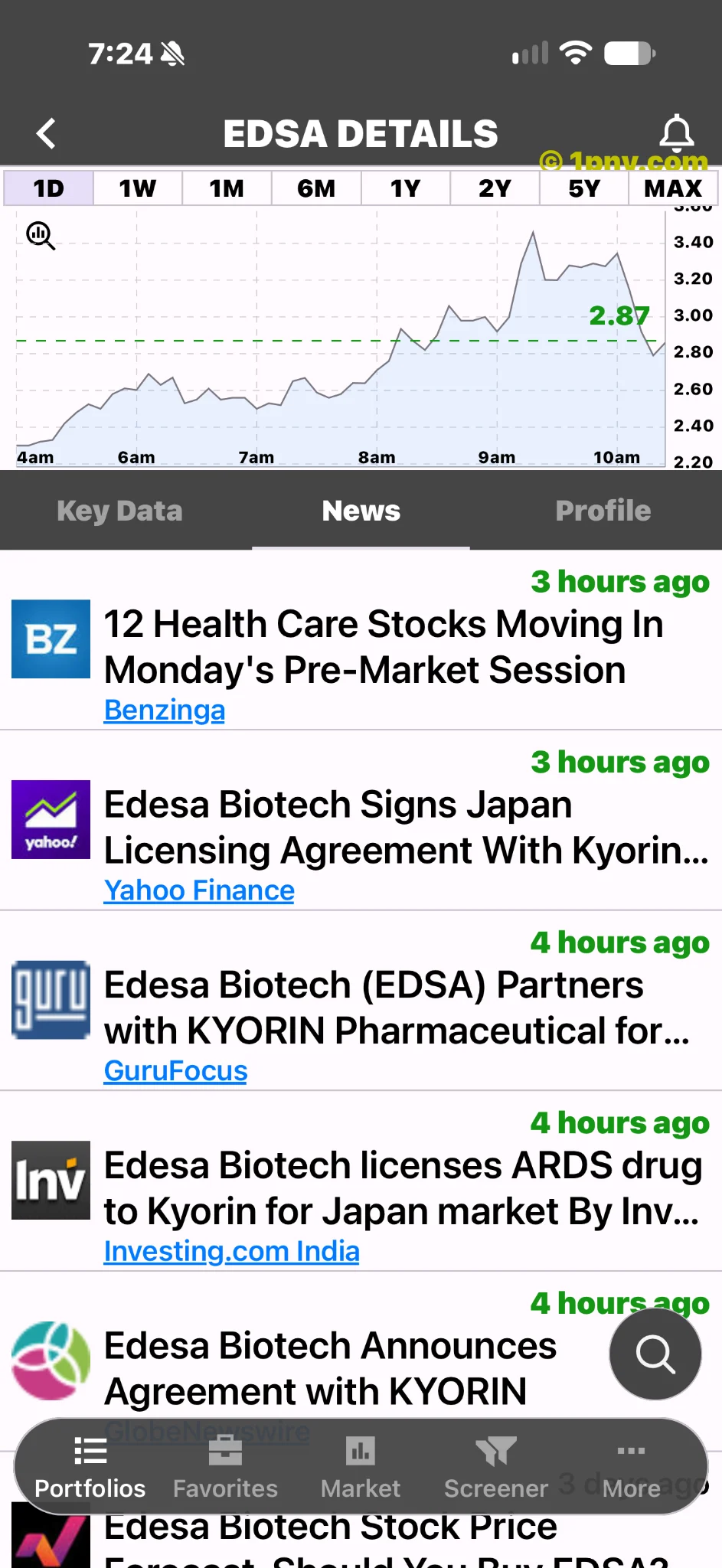
Kyorin's November 9 announcement confirms exclusive Japanese development and commercialization rights to paridiprubart, also called EB05, for acute respiratory distress syndrome, or ARDS. It describes $12 million upfront and up to approximately $134 million in additional milestones tied to development, reimbursement pricing and sales. Those milestones are conditional, not cash already earned. [Kyorin announcement](https://www.kyorin-pharm.co.jp/en/news/2026/001956.shtml).
The SEC filing specifies low-double-digit tiered royalties, subject to adjustments, and says Edesa retains rights outside Japan. It also reports termination of the H.C. Wainwright at-the-market offering agreement effective November 16. Ending that particular facility does not eliminate future financing or dilution risk. [SEC filing](https://www.sec.gov/Archives/edgar/data/1540159/000117184326007242/f8k_110926.htm).
The clinical evidence predates today's deal
Paridiprubart remains investigational. The positive Phase 3 results cited in the licensing announcement were released on October 28, 2025. Edesa reported adjusted 28-day mortality risk of 39% versus 52% in an efficacy population of 104 patients. Enrollment ended early for business reasons, an important limitation when assessing the evidence. These are company-reported findings, not new November 9 trial results or regulatory approval. [Original study announcement](https://www.globenewswire.com/news-release/2025/10/28/3175297/0/en/Edesa-Biotech-Reports-Positive-Results-in-Phase-3-Respiratory-Study.html).
Today's company release also says the drug is being evaluated in a U.S. government-funded platform study. Kyorin will fund Japanese development, regulatory and commercialization work; Edesa will supply the product. A funded regional partner advances the program, while clinical and regulatory outcomes remain uncertain. [Edesa announcement](https://www.globenewswire.com/news-release/2026/11/09/3398164/0/en/edesa-biotech-announces-agreement-with-kyorin-pharmaceutical-to-develop-and-commercialize-paridiprubart-in-japan.html).
A rebound inside a damaged longer-term chart
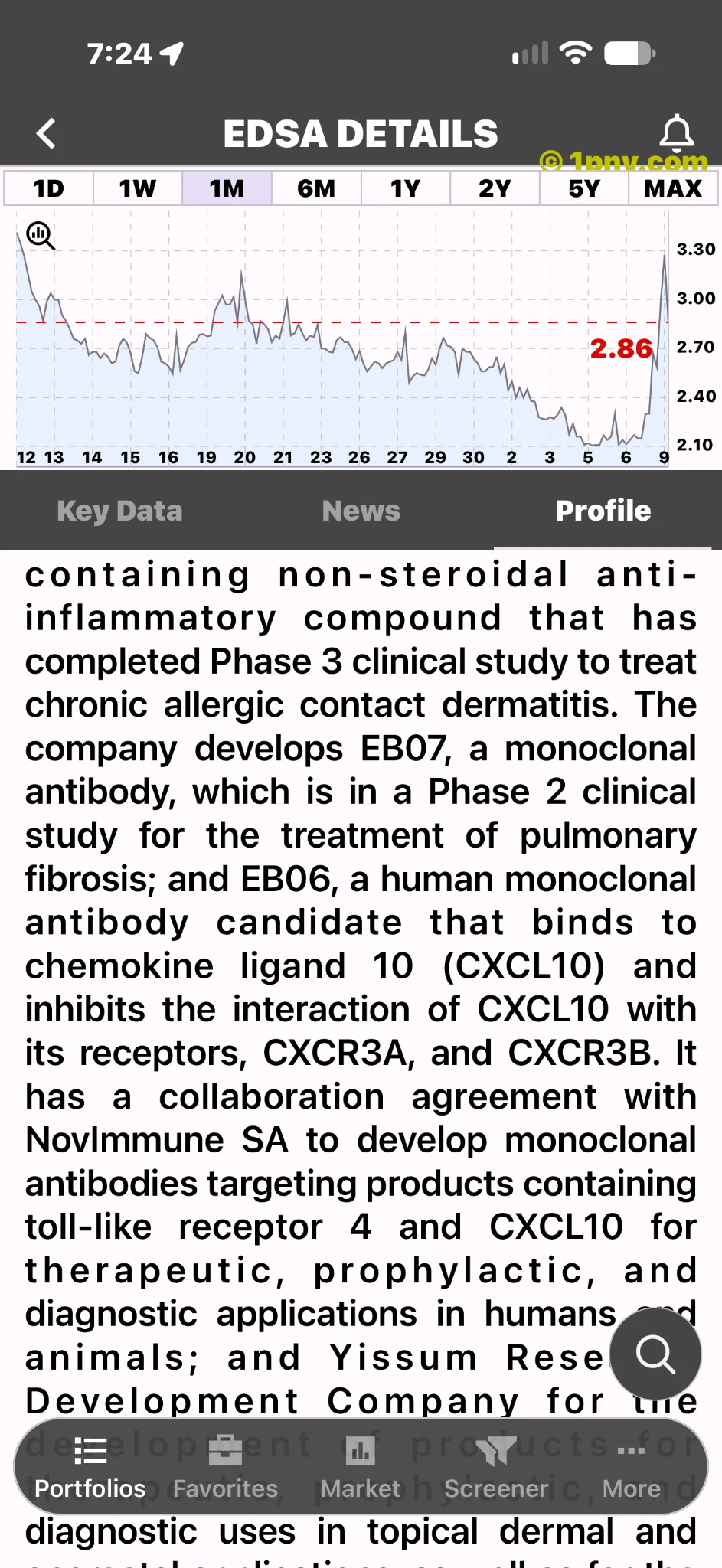
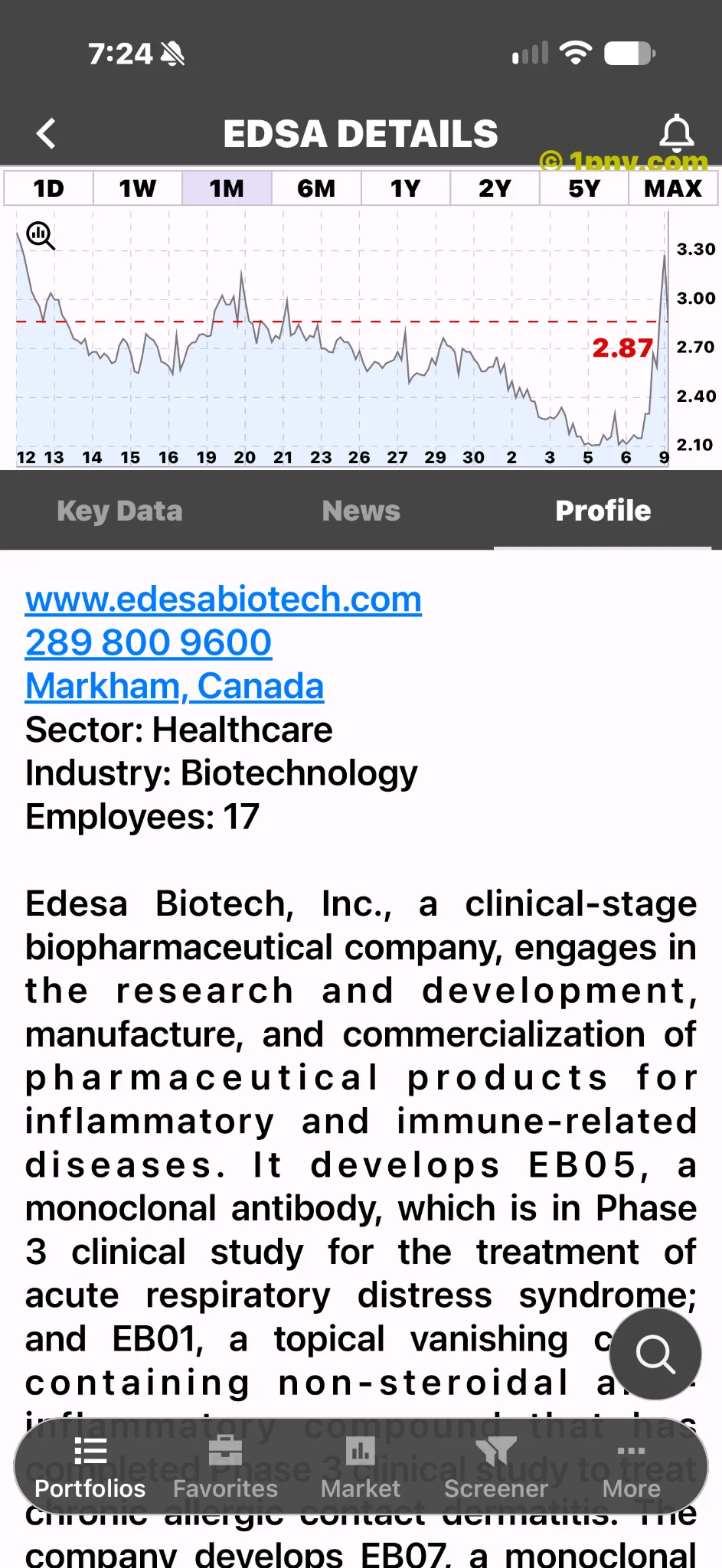
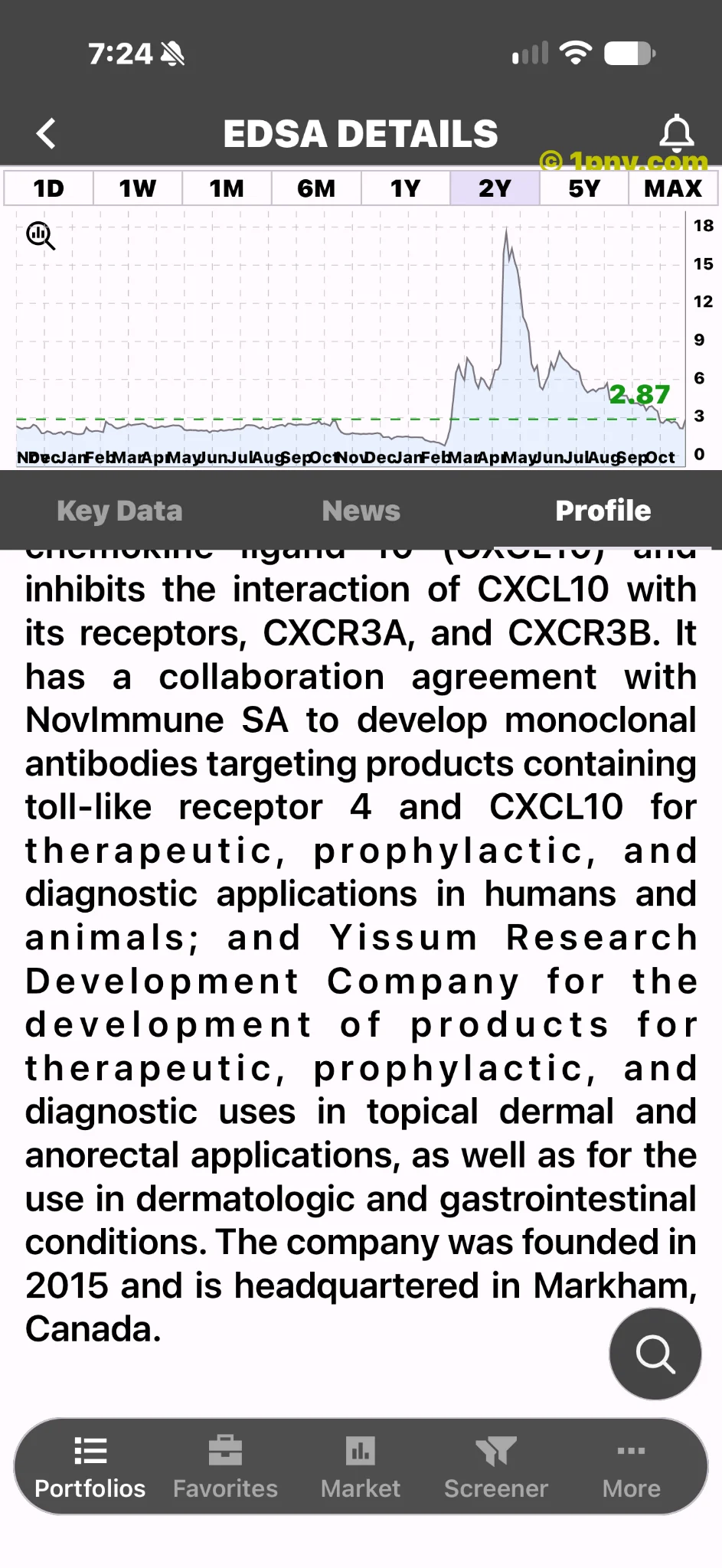
The one-month screenshot shows a late rebound from roughly $2.10. The six-month and two-year views show substantial earlier peaks followed by extended declines. Today's surge interrupts that weakness; one session cannot establish a durable reversal.
The app's profile text is background from the supplied screenshots, not a substitute for current company disclosures. Likewise, GRAB is an app label, not this article's recommendation.
What EDSA needs to deliver next
Investors now have concrete developments to follow: execution of Japanese development plans, further clinical evidence, regulatory progress and the financial effect of the upfront payment. Potential milestone totals should be assessed alongside their conditions and timing, rather than treated as present company value.
Our earlier [volume-watchlist report](https://penny-stock.app/stories/high-volume-penny-stocks-the-verified-news-behind-the-november-9-watchlist) mentioned EDSA's conference calendar. The licensing agreement is the substantive new development examined here.
For now, EDSA has a stronger business headline and a volatile stock response. The deal gives investors something measurable to track, but the chart still demands caution. This is market reporting, not personalized investment advice.