$EVAX, $3.25. According to PennyGems App stock analysis a scheduled clinical update gives a small biotechnology company something investors can put on a calendar. For Evaxion, the appeal is an opportunity to learn more about the durability of responses to its personalized cancer-vaccine program. The risk is that expectations can move the share price well before the evidence settles the scientific or commercial questions.
This is an event-driven research story. A rising quote before a presentation does not reveal the results, establish regulatory approval or guarantee that buyers will benefit after publication.
A defined upcoming data milestone
Evaxion’s October 2 announcement scheduled three-year phase-two EVX-01 clinical results for October 24 at ESMO, followed by immune data at the November 4–8 SITC meeting. The program studies a personalized vaccine in advanced melanoma. [1]
Our interpretation is that a defined information event can attract investors seeking an update to their view of the company. Longer follow-up may help assess whether earlier responses persist. That is a plausible reason for attention around EVAX, not proof of what caused the specific move in the screenshot.
The distinction between an upcoming presentation and newly released results matters. As of October 17, the scheduled October 24 update is still ahead. We do not treat anticipated findings as known facts.
What the PennyGems screenshot shows
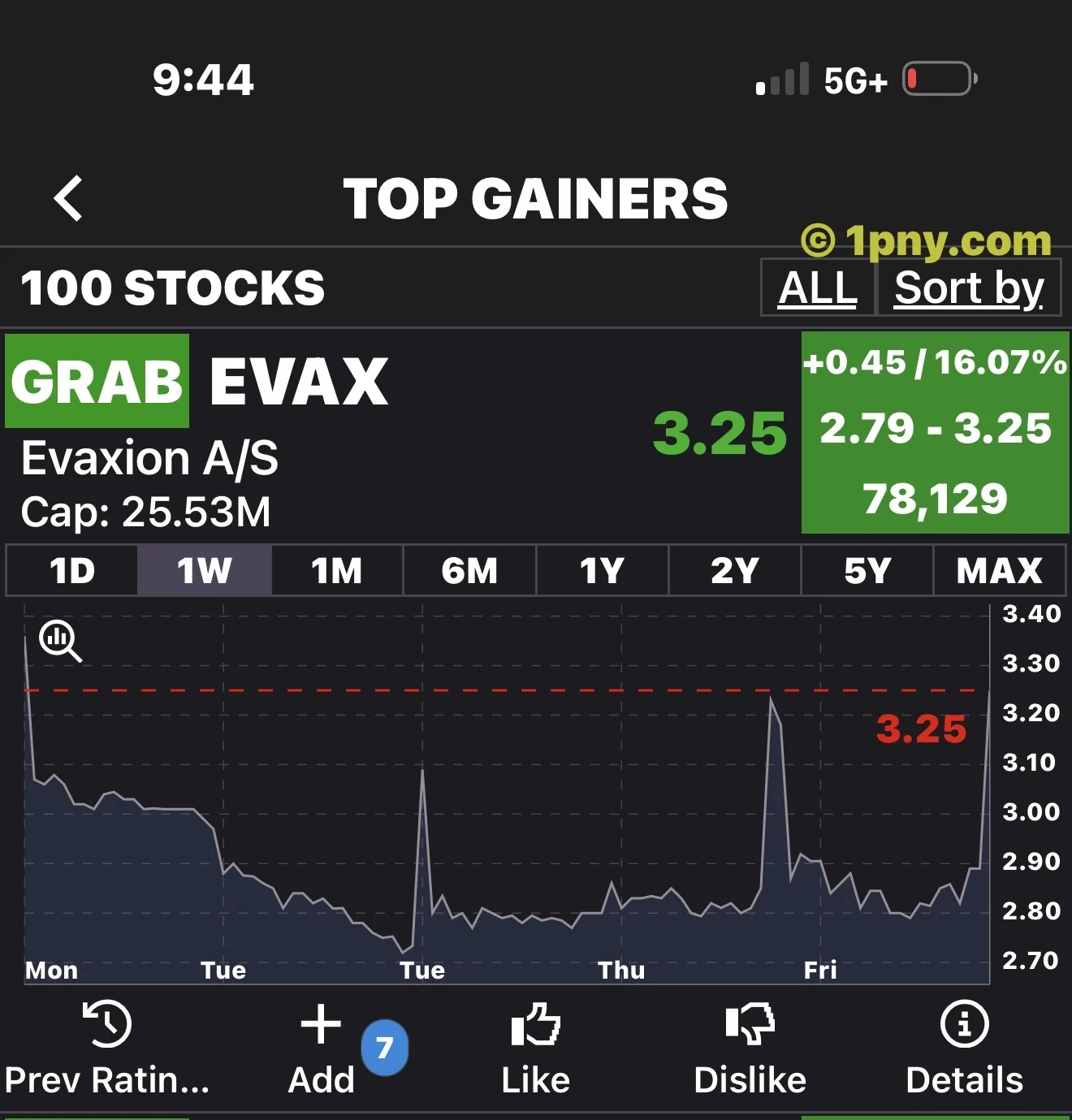
The reader’s screenshot displays EVAX at 3.25, up 16.07%, with a GRAB rating and the one-week view selected. The visible path includes declines and sharp rebounds. These are captured app figures, not verified closing returns, a live quote or a recommendation adopted by this publication. The full capture date and quote currency are not shown.
A price chart records market behavior. It cannot establish clinical benefit, identify an optimal treatment or show whether a drug candidate will meet regulatory requirements. Those questions require evidence beyond a trading screen.
Why a promising response rate is not the whole answer
The company’s earlier two-year update involved 16 patients. [1] In a small study, a few outcomes can substantially change a percentage, and findings may not generalize to a broader population. Comparing results with unrelated trials also introduces differences in patients, treatments and follow-up.
A careful reader should examine the study design, treatment exposure, missing observations, safety reporting and the duration of responses. Our focus would be what the new evidence adds to the existing record, rather than whether a headline sounds more exciting.
The contribution of a vaccine also needs to be distinguished from the effects of accompanying therapy. An encouraging combined-treatment result does not automatically isolate the vaccine’s benefit. This is a question for the trial evidence, not something that a share-price gain can resolve.
The investment test after the presentation
A stronger case would involve informative follow-up, credible plans for further development and resources sufficient to pursue those plans. A weaker case would involve findings that fail to support expectations, uncertainty that remains unresolved or funding needs that change the economics for shareholders.
EVAX offers a clear upcoming catalyst, with meaningful uncertainty on both sides. Investors should distinguish clinical progress from commercial value and position any thesis around what the evidence actually demonstrates. The presentation date is a reason to investigate, not a promise of a successful investment.
About PennyGems, the app behind the screenshots
PennyGems, available for iPhone [4] and Android [5], provides daily buy/sell ratings and tools to compare sectors and flag weaker candidates. Its iPhone listing advertises over 2,000 stocks under $10. The reader supplied these screenshots. App signals do not guarantee returns.