$SITC, $3.46. According to PennyGems App stock analysis sITE Centers presents a different question from a typical growth stock: how much value can shareholders receive as assets turn into cash, and what risks remain while they wait? A large distribution can attract attention, but the quoted share price alone does not answer that question.
The announced payout offers a plausible explanation for renewed buying interest. It does not establish the exact cause of every price movement in the supplied screenshot.
The cash announcement behind the interest
On October 15, 2026, SITE Centers announced roughly $32.4 million of net proceeds from selling its Dividend Trust Portfolio interests and declared $3 per common share, payable November 5. The record date is October 27; the ex-dividend date is November 6. [1]
For investors, a declared distribution makes part of the cash-return story more concrete. It still needs to be evaluated alongside the value of the stock after payment. Treating the entire distribution as profit would ignore the corresponding reduction in company assets.
What the PennyGems screenshot shows
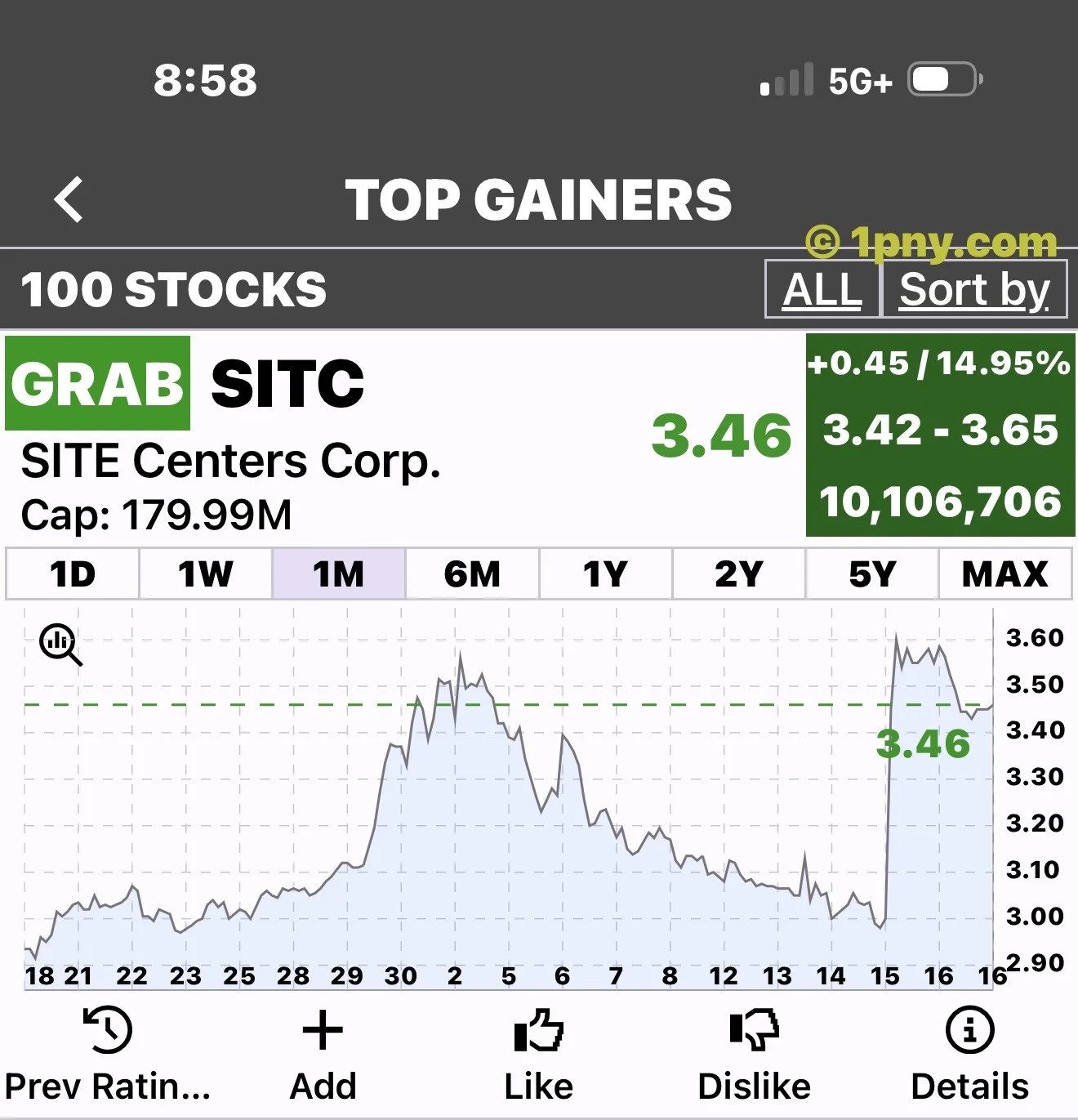
The reader’s image displays SITC at 3.46, up 14.95%, with PennyGems’ GRAB rating and a one-month chart selected. The sharp late jump is visible, but the complete capture date and quote currency are not. These are app figures, not independently verified closing returns or our recommendation.
Comparing that captured price with the payout may look striking. It is not a reliable calculation of the investor’s remaining cost: subsequent pricing, trading eligibility and the value left in the business all matter.
The dividend right can move with the shares
SITE Centers says due bills apply from October 27 through November 5: selling in that window transfers the dividend right to the buyer. The record date alone therefore does not settle entitlement. [1]
This is a reason to confirm trade treatment with a broker before acting. An investor should compare total value before and after the distribution, including the remaining shares, rather than assuming a cash payment can be captured without an economic adjustment.
Leaving the exchange changes the investment
The company expects NYSE delisting before trading on December 4 and says it has arranged neither another national exchange listing nor a quotation venue. [2]
Our assessment is that investors must consider whether any potential residual value compensates them for difficulty trading or exiting. A security can look inexpensive on paper while being unsuitable for someone who needs liquidity. Any valuation also needs a current accounting of remaining assets, liabilities, expenses and the timing of future cash returns.
SITC deserves attention as a special situation. The attractive scenario is orderly realization of value with controlled costs. The weaker scenario involves disappointing residual proceeds or a costly wait. A large distribution is the beginning of that analysis, not a complete investment thesis.
About PennyGems, the app behind the screenshots

PennyGems supplied the chart screenshots. Available for iPhone [4] and Android [5], it helps readers research low-priced stocks, compare sectors and review buy/sell ratings updated daily. Its iPhone listing advertises over 2,000 stocks under $10. These signals can help build a watchlist and flag weaker candidates; they do not guarantee returns.