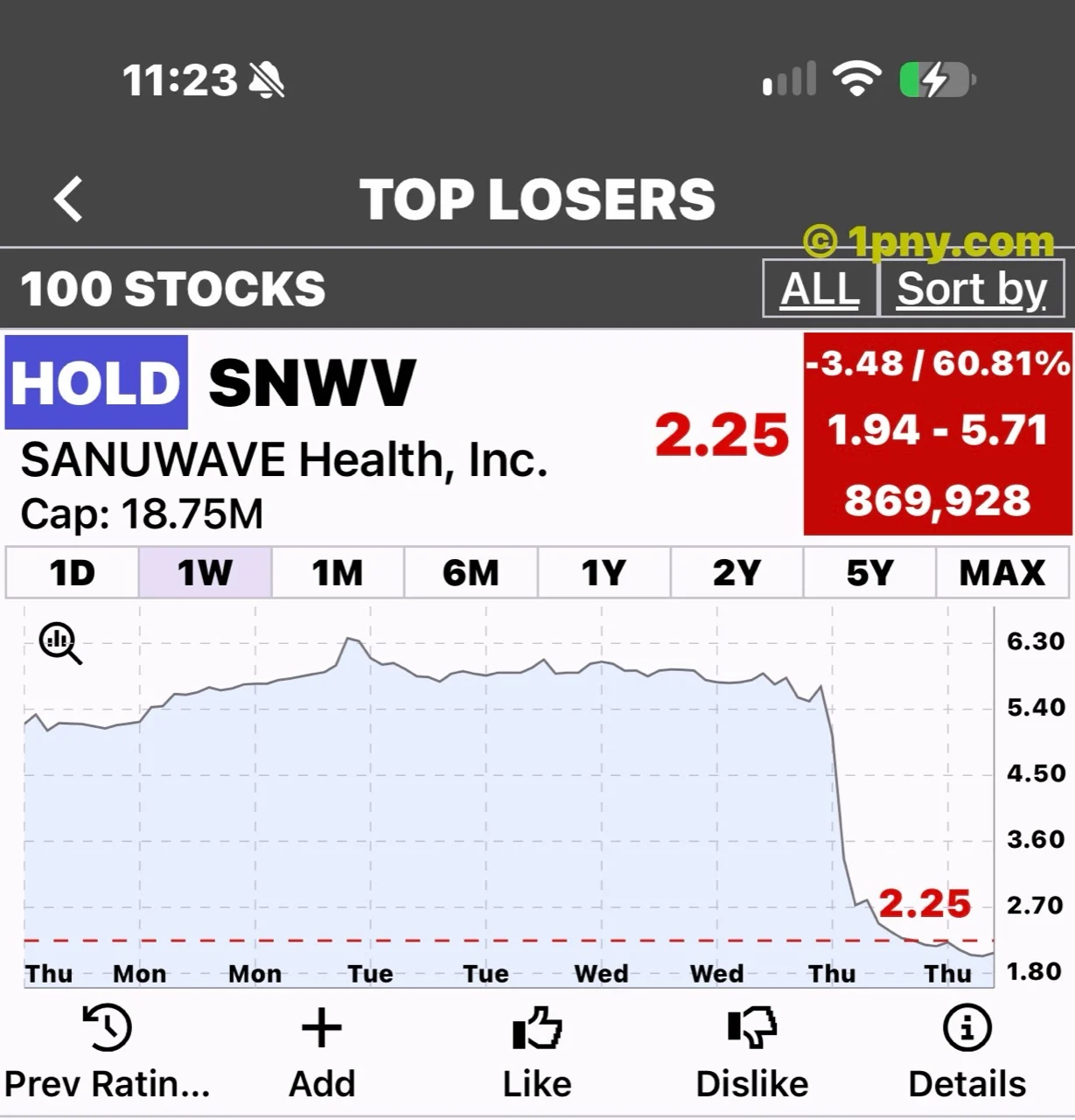
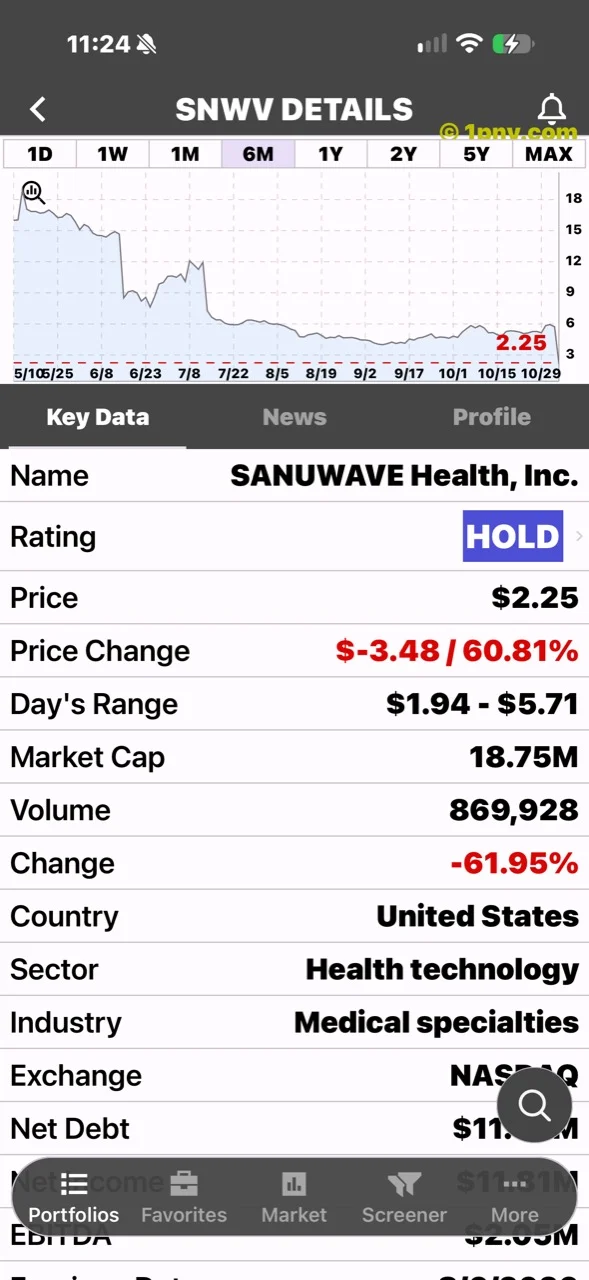
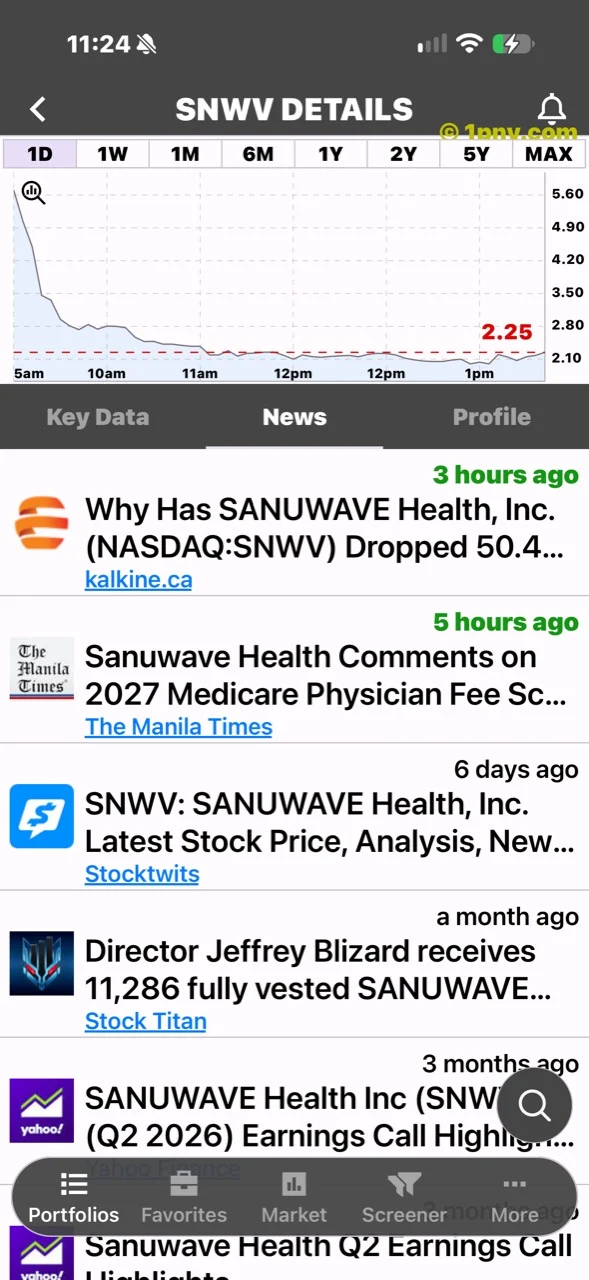
SANUWAVE Health's supplied PennyGems snapshot shows SNWV at $2.25, down 60.81%, after a steep decline. The clearest company-specific development is a Medicare reimbursement reduction for UltraMIST treatments in physician offices and mobile clinics. The issue concerns what treatment providers will be paid, and how that could affect demand for the company's equipment and supplies.
These prices are captured readings, not a live quote or an official closing price. The policy announcement provides a strong explanation for investor concern, although it does not identify the motivation behind every trade.
The reimbursement decision puts customer economics under pressure
In its November 5 statement, SANUWAVE said the 2027 Medicare payment for CPT code 97610 in the physician-office setting would be $314.54, compared with $397.81 in 2026, a reduction of approximately 21%. The final Physician Fee Schedule rule was released after the market closed November 4. [Company announcement](https://www.biospace.com/press-releases/sanuwave-health-comments-on-2027-medicare-physician-fee-schedule-rate-for-ultramist).
A reimbursement rate is not the same as SANUWAVE's selling price or revenue per treatment. Medicare pays the provider under the applicable billing framework; the company sells products into that care environment. The investment risk is indirect but important: lower provider payments could change purchasing budgets, treatment economics and demand.
That distinction prevents a misleading shortcut. A roughly 21% reduction in one reimbursement rate does not automatically mean company revenue will decline by 21%. Actual effects depend on customer behavior, treatment volumes, pricing and the mix of settings served. Investors are reassessing those possibilities rather than observing a fully measured revenue impact already reported.
Hospital payments offer a partial counterweight
The same announcement said the hospital outpatient payment would rise to $235.04 from $204.98, approximately 15%. [Company announcement](https://www.biospace.com/press-releases/sanuwave-health-comments-on-2027-medicare-physician-fee-schedule-rate-for-ultramist).
The different directions matter. This is not a uniform payment cut across every location in which the treatment may be delivered. However, a favorable change in one setting cannot simply be subtracted from an unfavorable change in another. The financial result depends on where customers operate and how much business each setting generates.
A useful management update would therefore quantify exposure by care setting and explain whether hospital demand could offset pressure elsewhere. Without that bridge, assuming either a complete offset or a company-wide collapse would go beyond the disclosed evidence.
The uncertainty predates this trading session
SANUWAVE withdrew its fiscal 2026 guidance in August, citing market conditions including Medicare reimbursement developments. Its second-quarter release reported revenue of $9.7 million, down 3%, and 82 systems sold compared with 116 a year earlier. Applicator revenue nevertheless grew 13% to $7.3 million. [SEC-filed second-quarter release](https://www.sec.gov/Archives/edgar/data/1417663/000162828026054459/ex-991snwvpressreleasex806.htm).
That earlier disclosure shows why investors were already watching reimbursement closely. It also shows why equipment sales and recurring supplies should be evaluated separately. A weaker period for new systems does not necessarily imply an identical decline in use of installed equipment.
The final policy decision supplies new information, but commercial effects still need to be measured. Restored guidance, if management provides it, would help translate policy terms into a business outlook. Until then, the absence of a dependable forecast can itself make valuation more uncertain.
What would clarify the outlook?
The next useful evidence is customer ordering behavior, treatment-related supply demand, updated margins and management's assessment of funding needs. Investors should also look for a clear explanation of any response to the rule, distinguishing plans from changes that have actually been adopted.
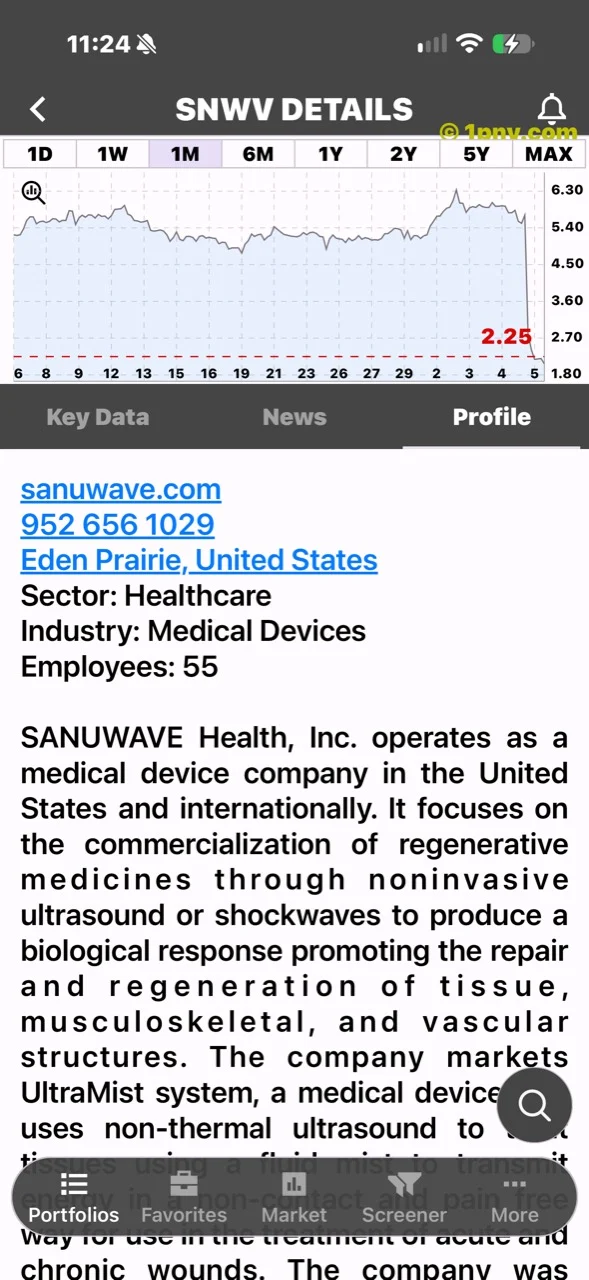
The size of the stock decline does not establish whether the reaction is proportionate. Equity values can respond sharply when expected future profits become less certain, but the chart alone cannot determine fair value. A recovery case needs operating evidence; a negative case also needs more than extrapolation from one day's price move.
Images: PennyGems / 1pny.com. The supplied chart, key-data, news and profile screens are historical snapshots. The HOLD badge is the app's signal, not this article's recommendation.