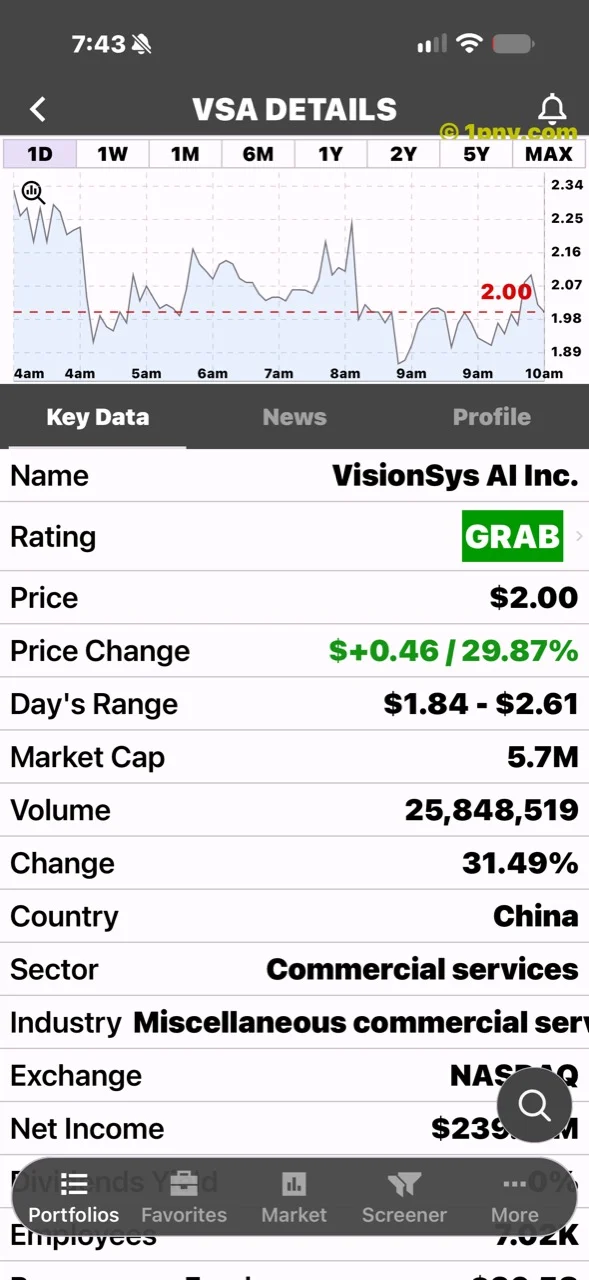
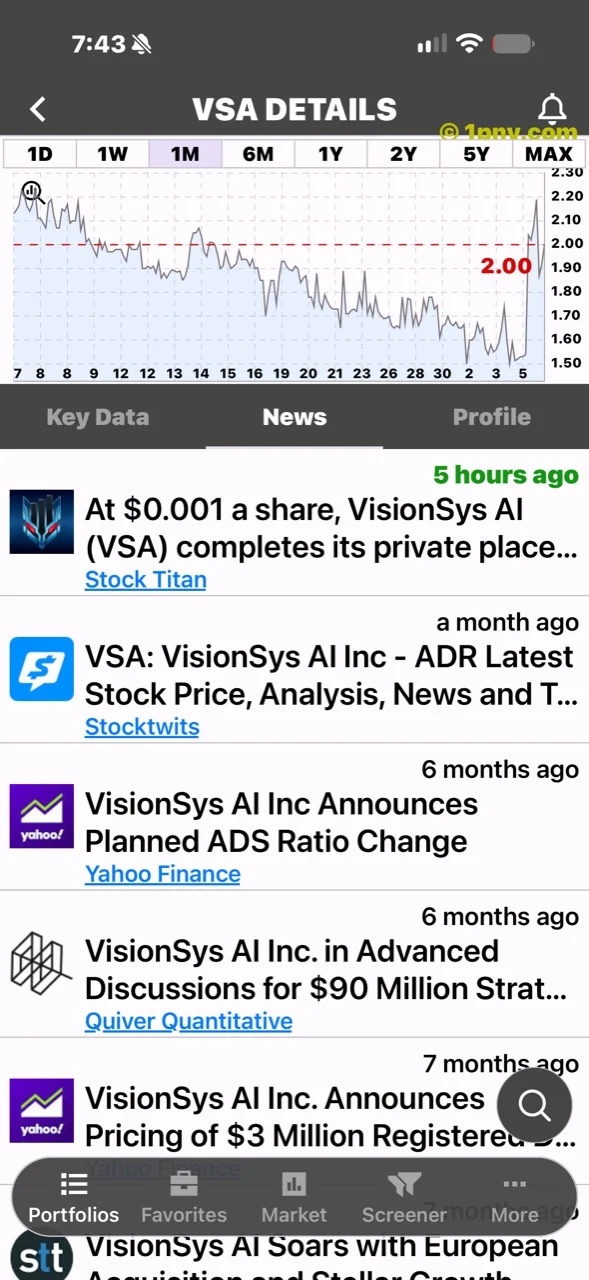
VisionSys AI's supplied PennyGems snapshot shows VSA at $2.00, up 29.87%, alongside a newly disclosed financing completion. The company's November 6 filing provides a concrete development to examine: a private placement with an aggregate purchase price of $125 million.
The transaction combines additional capital with a substantial issuance of ordinary shares. That makes the ownership implications as important as the financing headline. The disclosure is a plausible reason for renewed attention, but it does not establish the motivation behind every trade. The screenshot is a captured intraday reading, not a live quote or closing result.
The filing confirms completion rather than a proposal
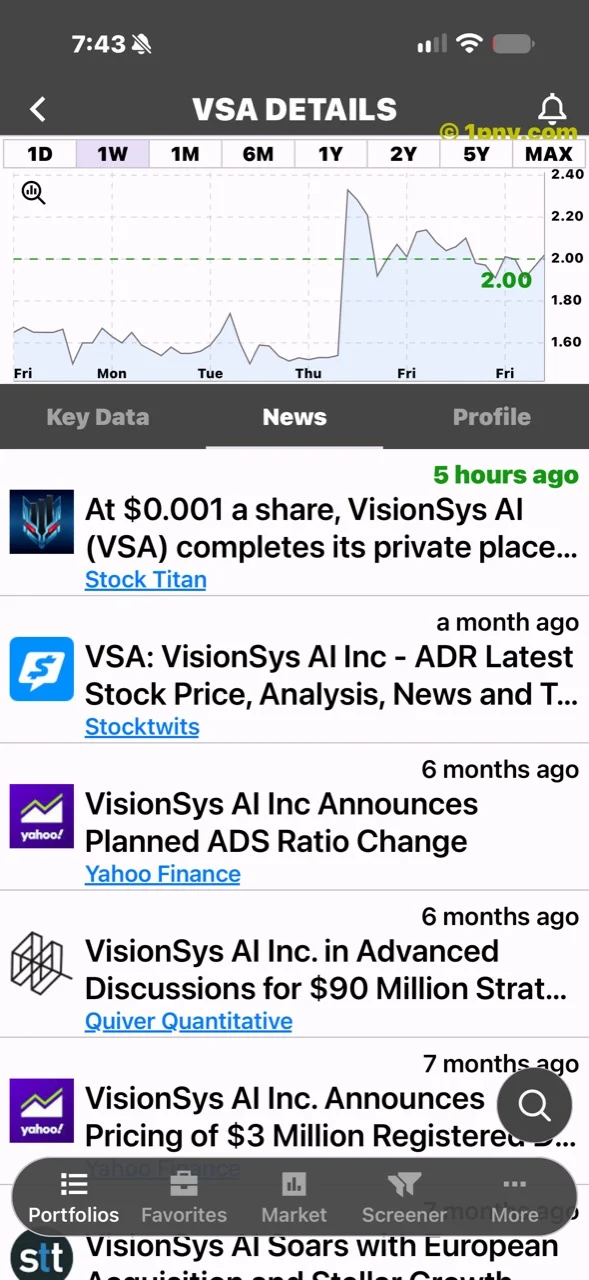
VisionSys reported that it completed the issuance and sale of 125 billion Class A ordinary shares on and before November 2, at $0.001 each. Agreements re-signed on October 10 increased the price from $0.000734 per share. The filing says consideration was paid in fiat money or cryptocurrencies at the company's discretion. [November 6 filing](https://www.stocktitan.net/sec-filings/VSA/6-k-vision-sys-ai-inc-current-report-foreign-issuer-e17a83a1a059.html).
Completion matters because an announced financing and a completed financing represent different stages. A completed transaction provides a firmer basis for assessing resources than a proposed deal that remains subject to closing.
However, the stated purchase price should not automatically be described as unrestricted cash in a bank account. The payment language permits more than one form of consideration. Investors need subsequent financial reporting to understand the assets received, their valuation and their availability for operations.
The central question is what the company can accomplish with those resources. Raising capital is a financing event; generating sustainable returns from that capital is a separate operating challenge.
Ordinary shares and ADSs require different price comparisons
The $0.001 transaction price applies to ordinary shares. VSA trades on Nasdaq through American depositary shares, or ADSs. Nasdaq's May corporate-action notice established a ratio of 2,500 ordinary shares per ADS, effective May 26. [Nasdaq ADS-ratio notice](https://www.nasdaqtrader.com/TraderNews.aspx?id=ECA2026-349).
Using that disclosed ratio, $0.001 multiplied by 2,500 equals $2.50 per ADS-equivalent. This is a unit conversion, not a target price, a guaranteed trading floor or evidence that public-market ADSs can be exchanged with placement participants at that value.
The same conversion translates 125 billion ordinary shares into 50 million ADS-equivalents. It does not mean that 50 million new ADSs have been deposited, listed or made immediately available for trading. Ordinary-share issuance and issuance of tradable depositary securities are different steps.
These calculations use the cited ratio and should be checked against any subsequent corporate actions before being used in a valuation. Comparing the ordinary-share price directly with the screenshot's $2.00 ADS quotation would mix different units.
The new capital comes with an ownership tradeoff
An equity financing increases resources while dividing ownership among more shares. Whether existing holders benefit depends on the terms and the value created with the proceeds, rather than the gross amount raised alone.
An exact dilution percentage requires a reliable capitalization table on a consistent basis. It should account for the relevant share classes and any outstanding instruments that can create additional shares. The app's displayed $5.7 million market capitalization is insufficient to establish the company's post-transaction equity value.
For the same reason, dividing the financing amount by the screenshot's market capitalization would not prove that the stock is undervalued. Those figures can reflect different dates or share-count assumptions. Investors need an updated denominator before making that comparison.
The useful follow-up is a clear reconciliation of the securities issued, assets received and resulting ownership. That would allow investors to evaluate both the stronger resource position and the effect on existing holders.
What would support a lasting recovery?
The next financial statements should clarify the composition of the financing proceeds and how management deploys them. Operating progress, cash use and returns on new investments will help determine whether the financing improves the business beyond the initial announcement.
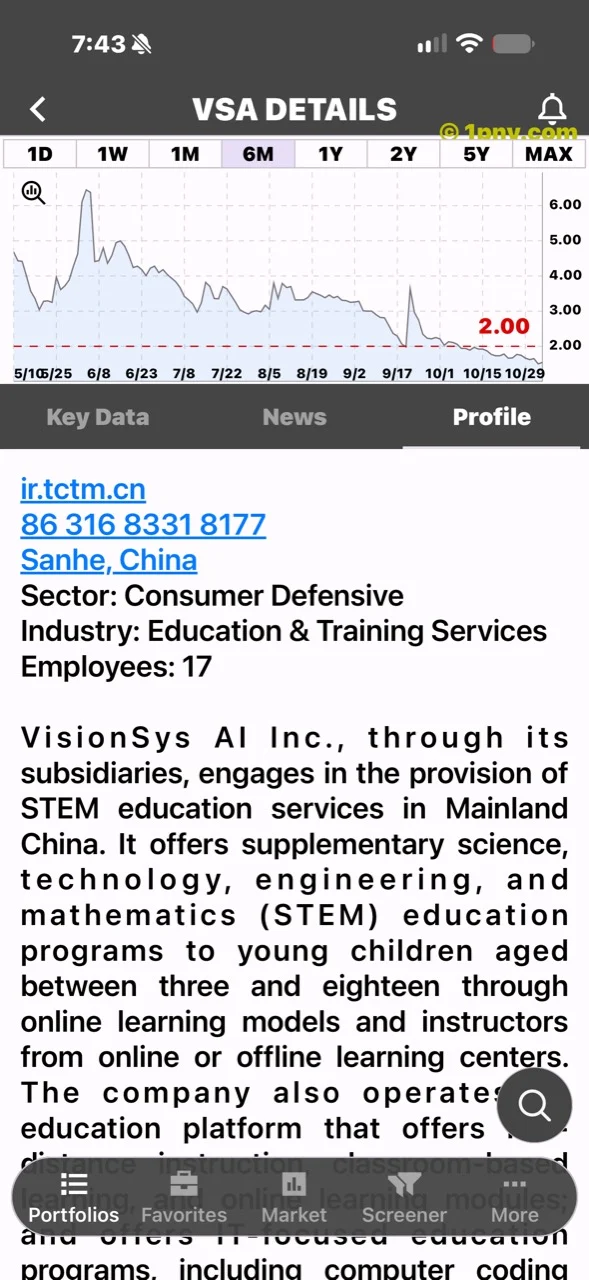
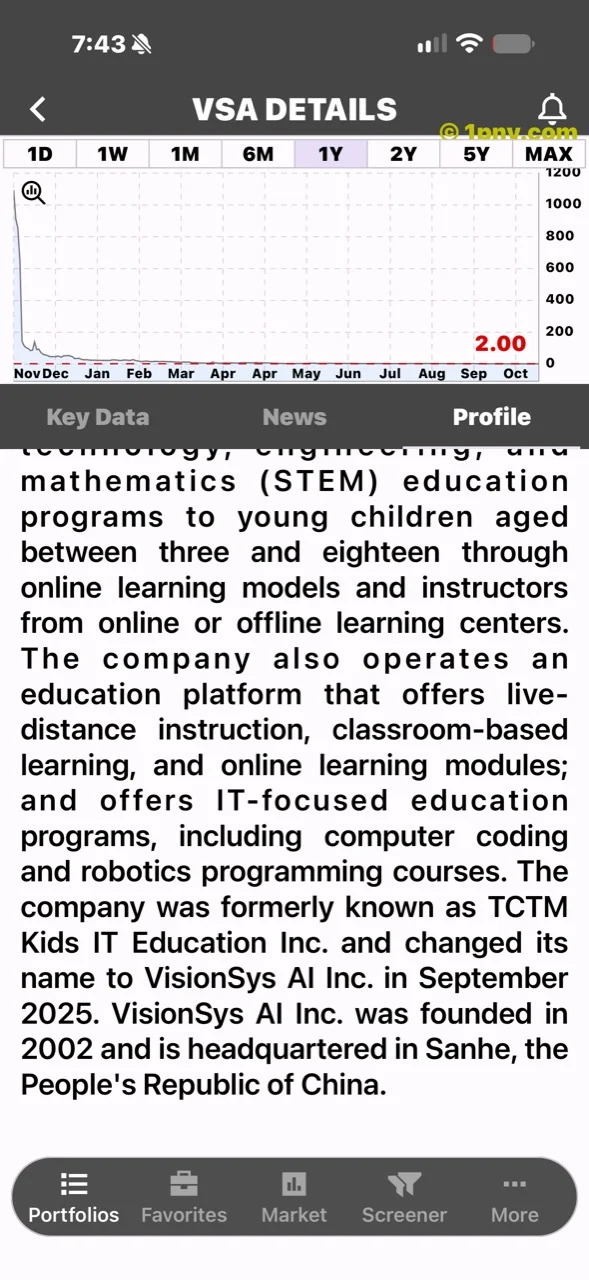
The supplied news screens also contain older ADS-ratio and financing headlines. Those historical items provide context, but should not be presented as new November 6 developments. Likewise, the app's company profile is a captured third-party description rather than a substitute for current company disclosures.
The session's gain shows renewed trading interest. A stronger long-term case would require transparent reporting and measurable results from the enlarged capital base.
Images: PennyGems / 1pny.com. All five supplied screenshots are included, including separate weekly and monthly news-chart views. The app's GRAB badge is not this article's recommendation.