$XELB, $0.407. According to PennyGems App stock analysis a creator’s online following can generate attention. Turning that attention into products people buy repeatedly is a different achievement. Xcel Brands’ plan to take Mesa Mia by Jenny Martinez into grocery food products puts that distinction at the center of an interesting small-company investment story.
The opportunity is a brand that could reach consumers beyond its existing categories. The unanswered question is how much economic value that expansion would create for Xcel’s shareholders after the costs of bringing it to market.
A planned move from an audience to the grocery aisle
On October 13, Xcel announced plans to expand Mesa Mia into consumer food products for supermarket and grocery distribution. Expected initial categories include sauces, prepared meals and desserts. [1]
This offers a plausible reason for renewed investor attention: a recognizable culinary personality could help a new product connect with shoppers. Our interpretation is that existing familiarity may reduce the difficulty of introducing a brand, but it does not remove the need for competitive products and effective distribution.
The announcement describes an intended expansion. It should not be converted into a claim that nationwide orders, a particular level of sales or profitable shelf space have already been secured.
What the PennyGems screenshot shows
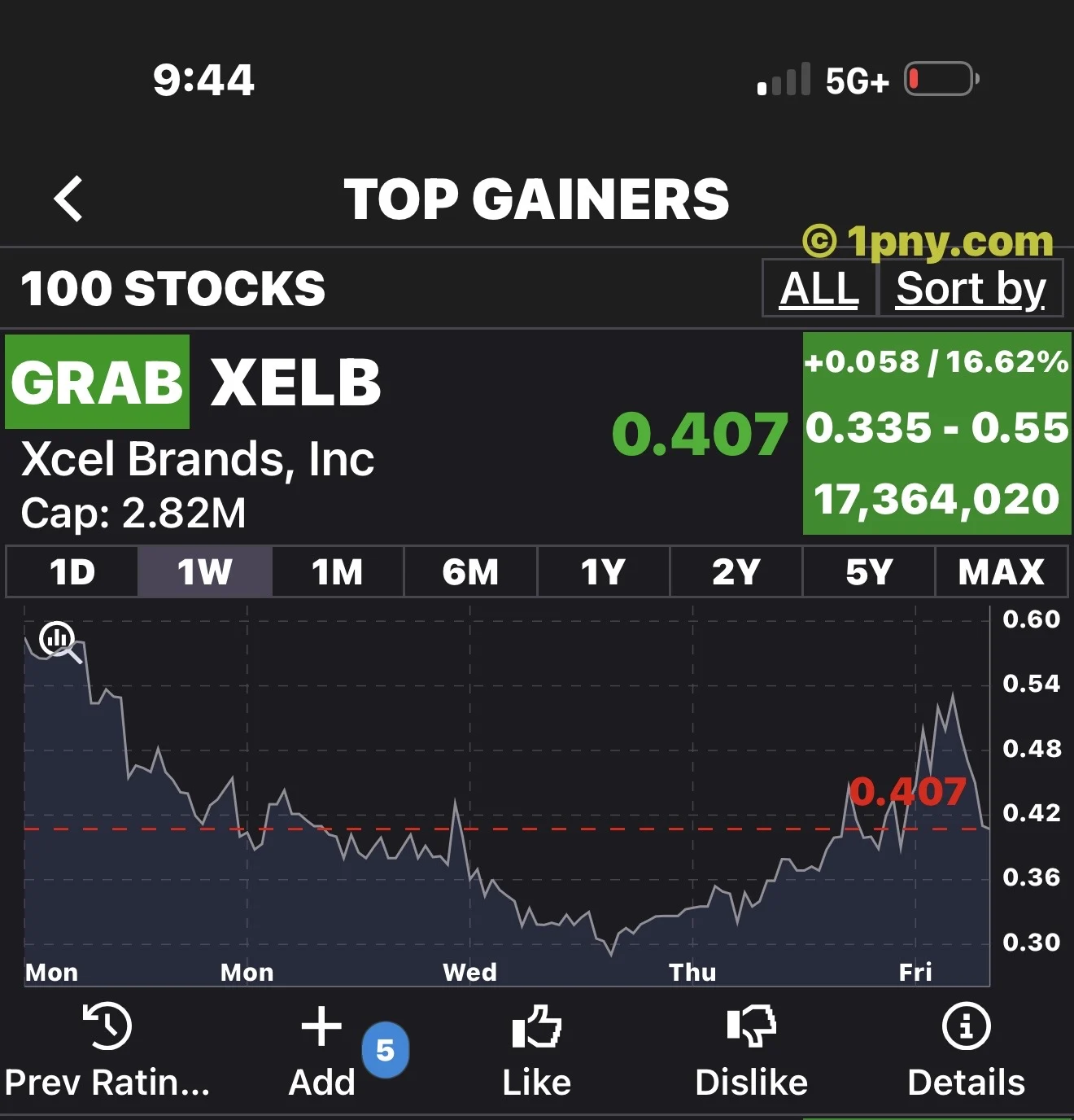
The supplied screen displays XELB at 0.407, a gain of 16.62%, with a GRAB rating and the one-week view selected. The chart shows a decline followed by a partial recovery and further volatility. These are captured figures from the app, not independently verified closing returns or our stock recommendation. The full capture date and quote currency are not shown.
A price response can indicate that investors are reconsidering expectations. It cannot establish the size of future grocery sales or prove that the new strategy caused the entire move. The business documents and subsequent operating results must carry that analysis.
Distribution and repeat purchasing are the real tests
A product needs more than a launch announcement. Our practical checklist would examine which retailers carry it, whether shoppers buy it again and what economics remain after manufacturing, shipping, promotions and other obligations. Those are questions for future evidence, not operating milestones we assume have been reached.
For a licensing and brand-management business, the consumer’s purchase also needs to be translated into the revenue and cash actually attributable to the public company. Retail sales value and a licensor’s income are not interchangeable. Without disclosed terms, assigning a royalty rate or a profit forecast would create false precision.
The same discipline applies to audience size. Followers represent potential reach rather than guaranteed customers. The investment argument becomes more persuasive when demand persists beyond an initial burst of publicity.
What would make the expansion valuable
The stronger scenario would combine credible distribution, repeat purchases and financial reporting that demonstrates worthwhile returns to Xcel. A weaker scenario would generate attention without sufficient demand, or require capital that outweighs the value created.
We would assess any new category alongside the company’s existing obligations and funding needs. An appealing consumer concept does not automatically resolve the economics of the whole business.
XELB offers an engaging story about social influence meeting physical retail. Its value as an investment depends on execution and the terms under which the company participates. Mesa Mia’s expansion is a development worth following, not a substitute for evidence of sustainable earnings.
About PennyGems, the app behind the screenshots
PennyGems, available for iPhone [4] and Android [5], provides daily buy/sell ratings and tools to compare sectors and flag weaker candidates. Its iPhone listing advertises over 2,000 stocks under $10. The reader supplied these screenshots. App signals do not guarantee returns.