
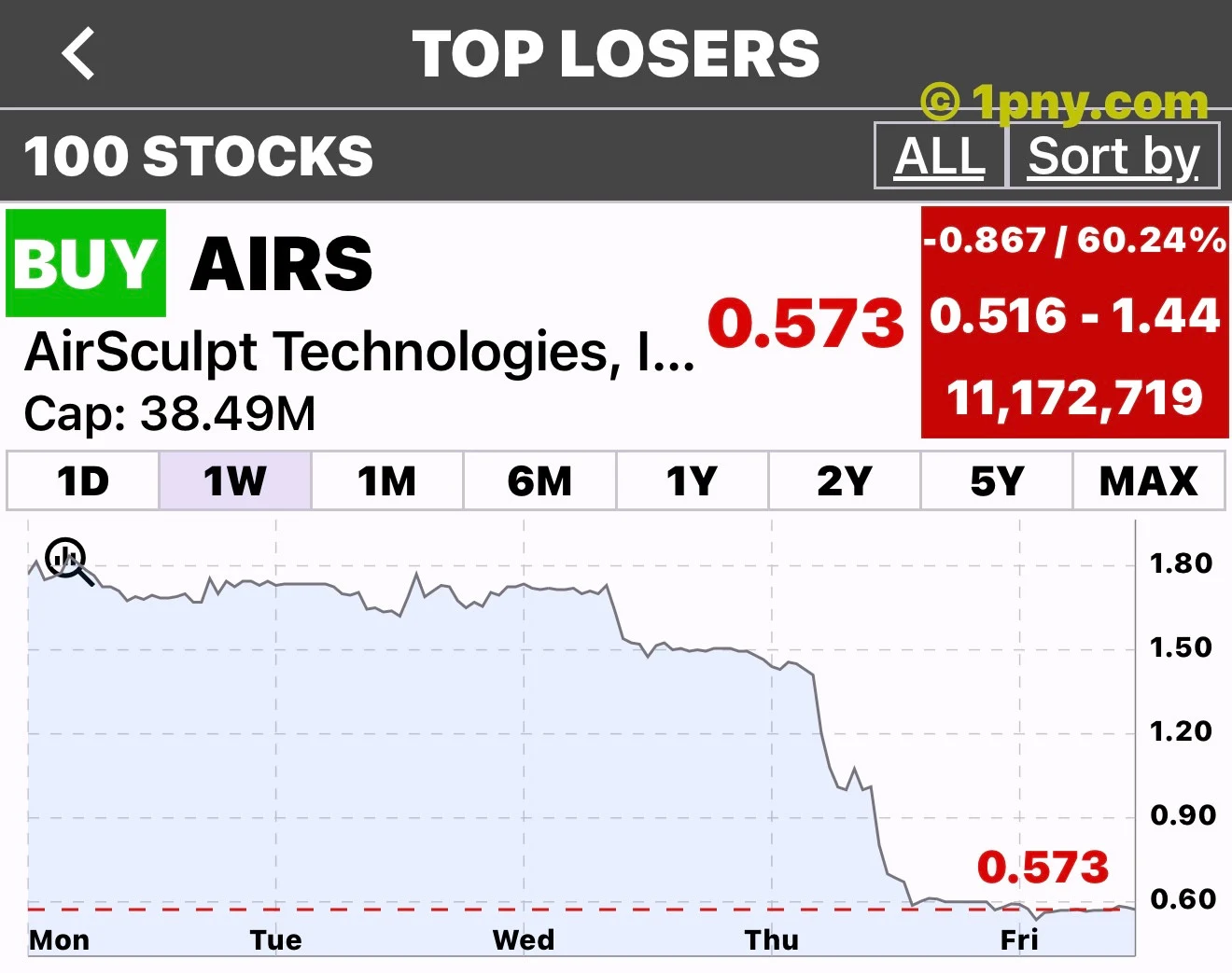
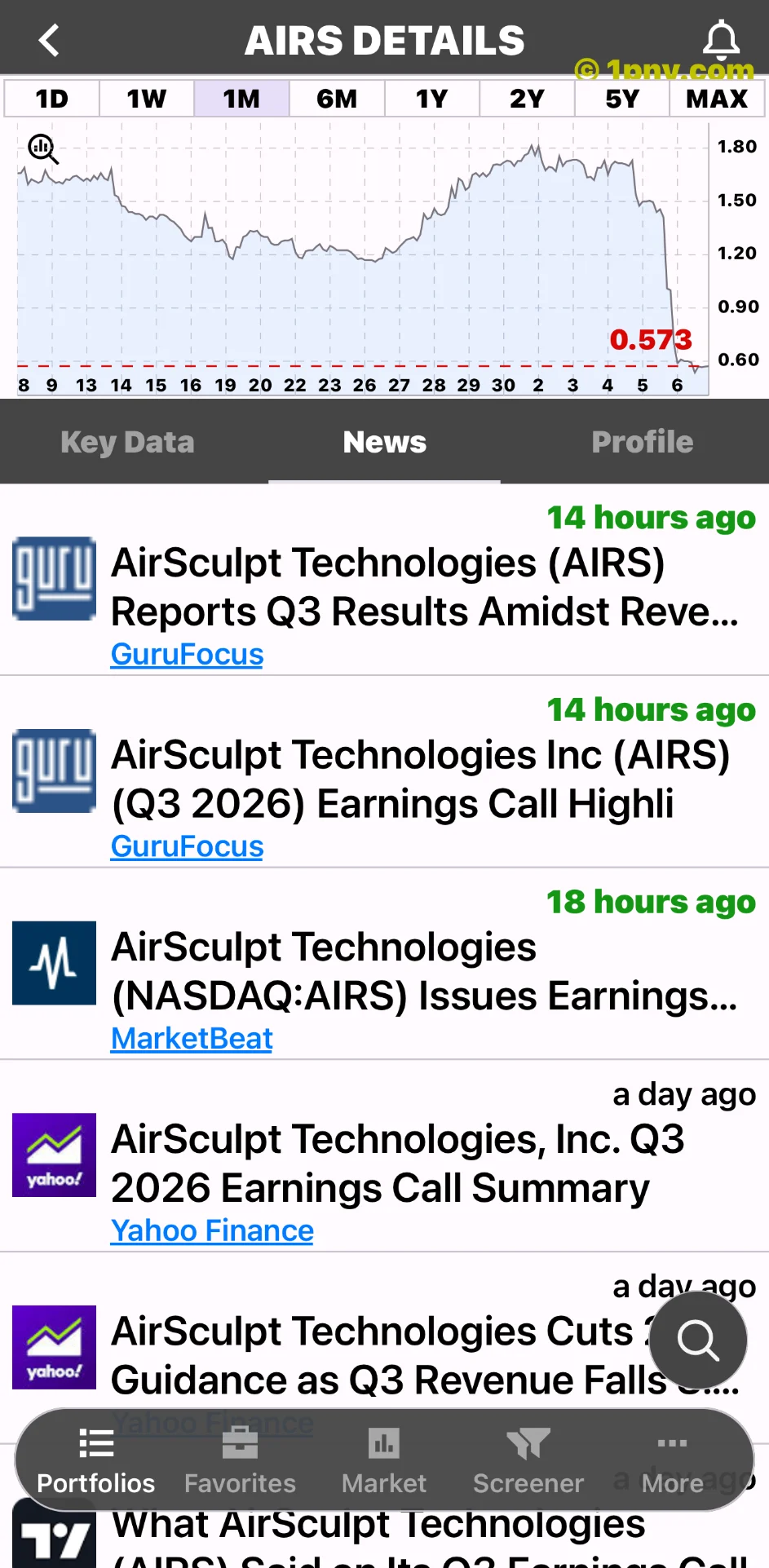
$AIRS, $0.57. The supplied Penny Gems snapshot shows AirSculpt down −60.24%. The November 6, 2026 earnings update gives the selloff a clear operating backdrop: fewer procedures and reduced annual expectations. The timing supports an earnings-related explanation, although public disclosures cannot establish every seller's motive.
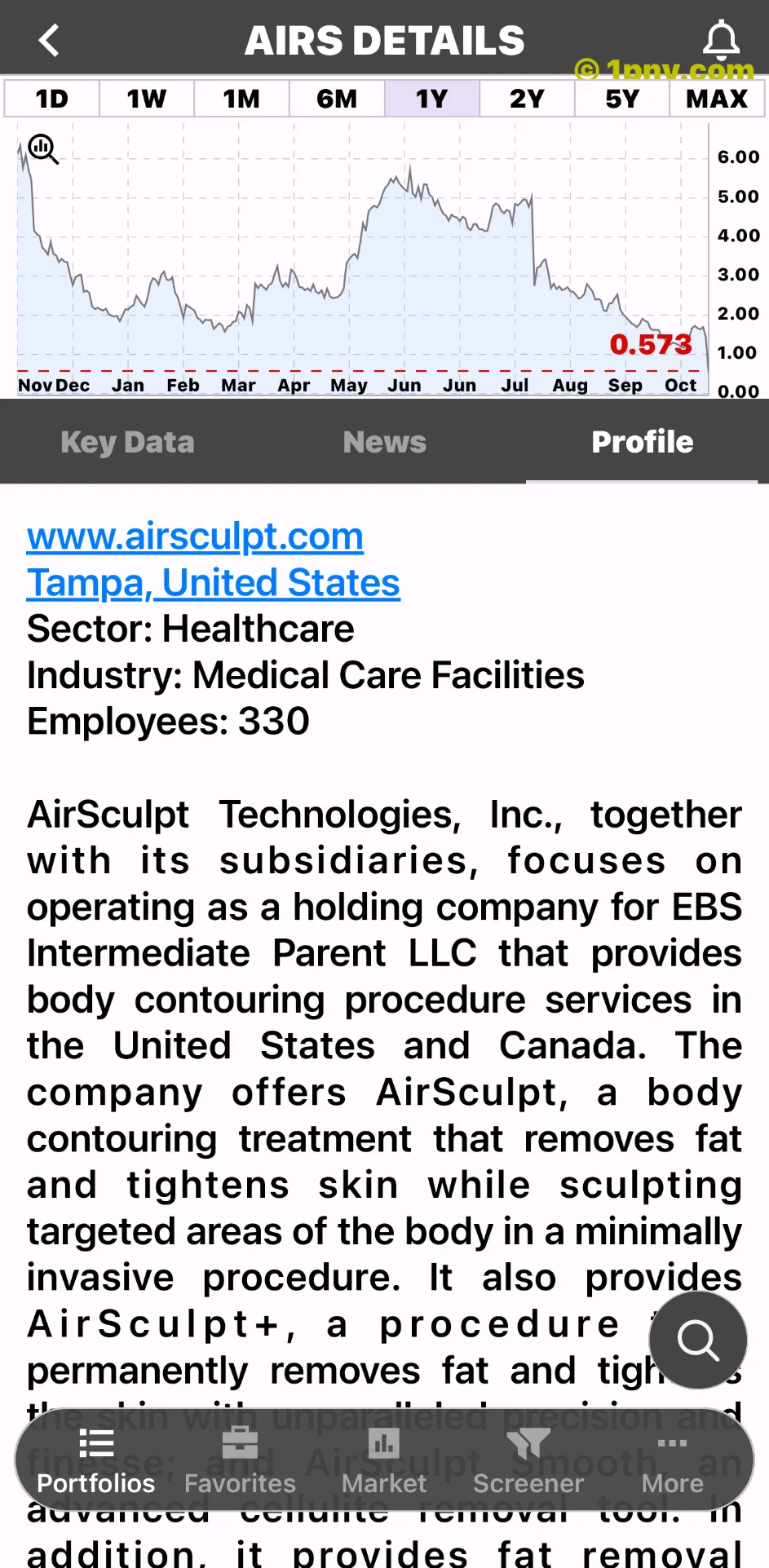
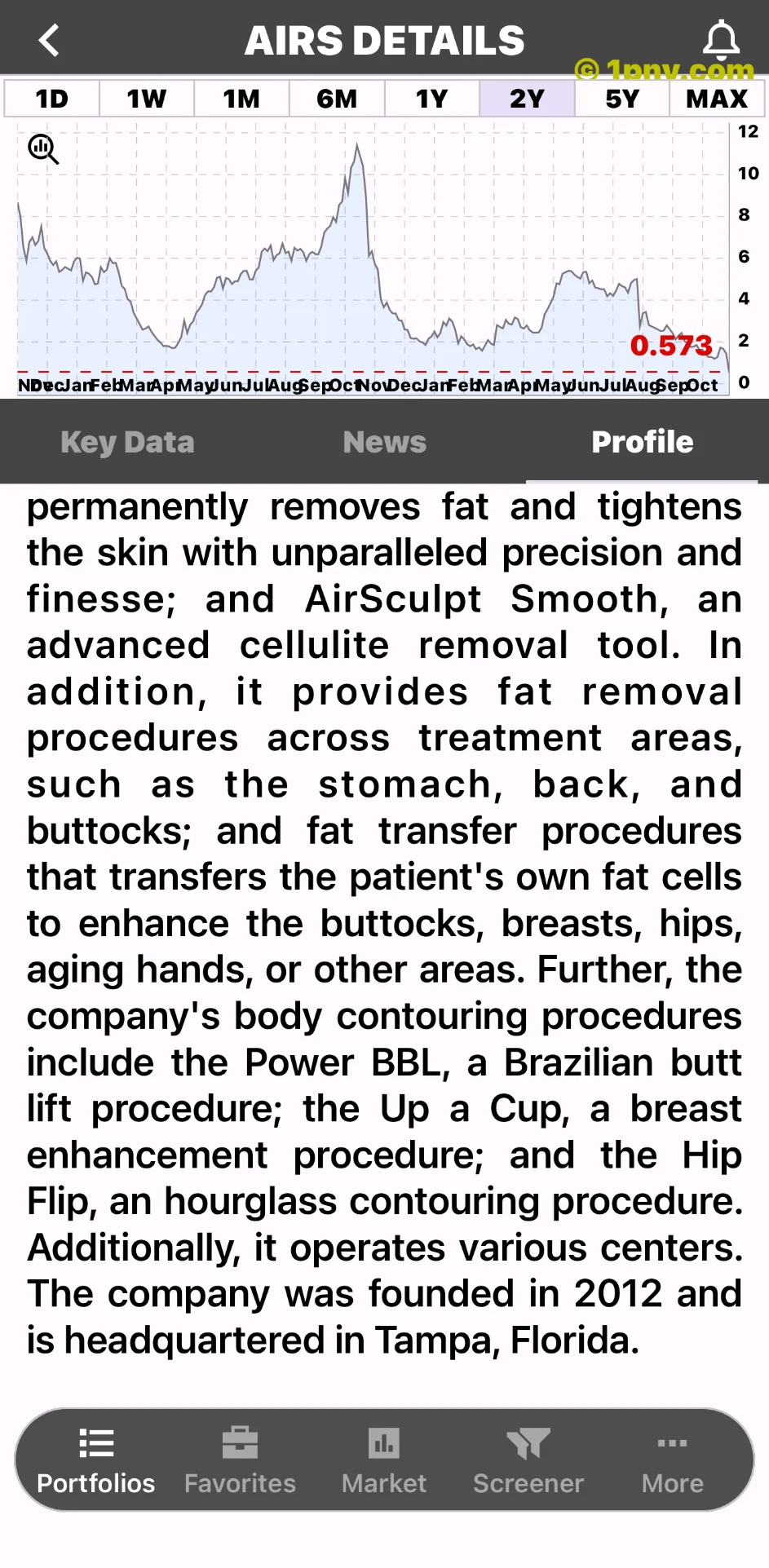
AirSculpt provides body-contouring procedures through 31 centers across 20 states and Canada. Its quarterly filing reports customer acquisition costs of $3,767 per customer, versus $3,145 a year earlier. That combination makes the relationship between marketing spending and completed procedures particularly important. [AirSculpt quarterly filing](https://www.sec.gov/Archives/edgar/data/1870940/000187094026000055/airs-20260930.htm)
Lower expectations outweighed refinancing relief
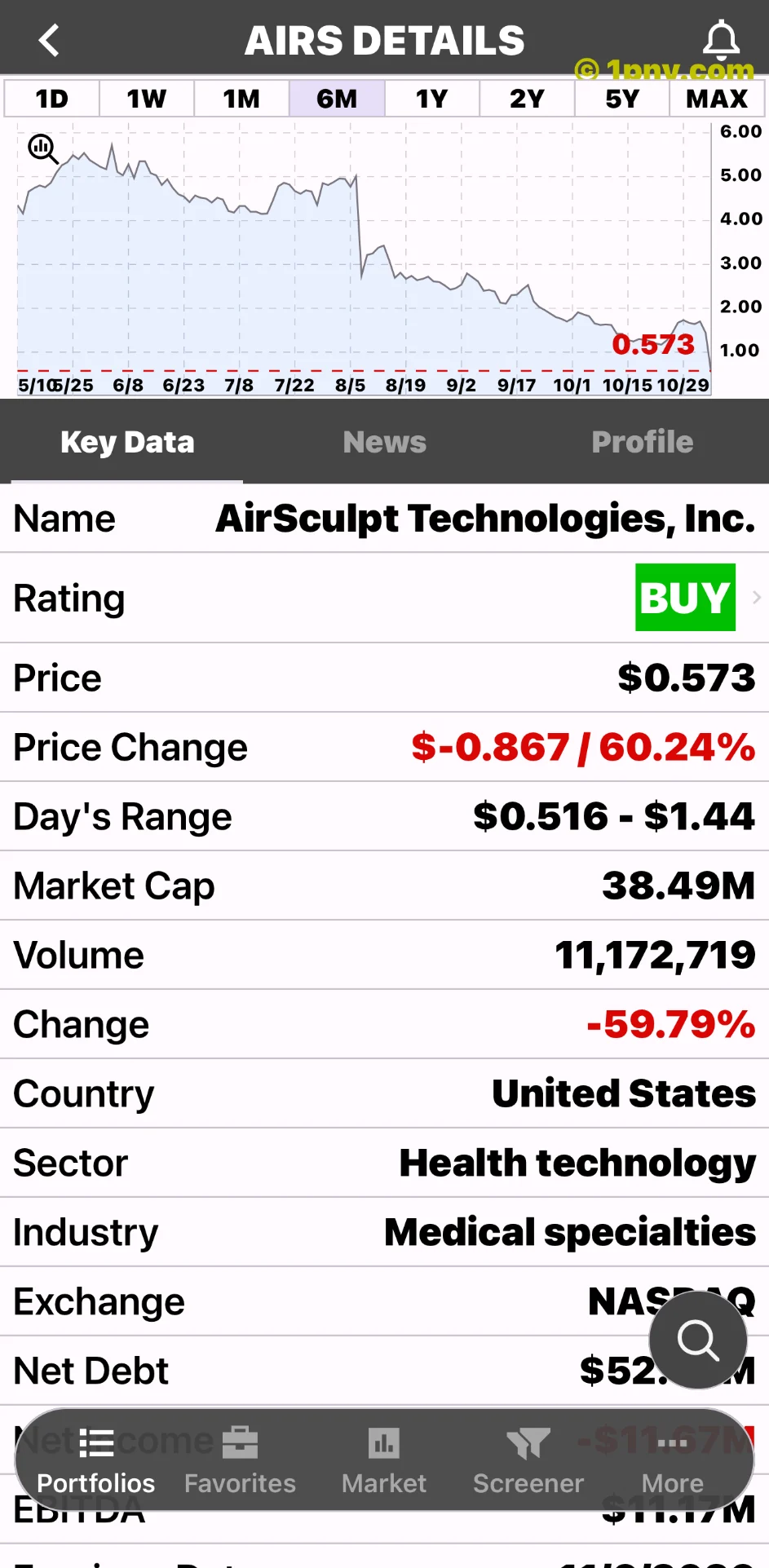
Annual revenue guidance fell to $144–146 million from $151–157 million; adjusted EBITDA guidance dropped to $9–10 million from $12–14 million. Quarterly revenue declined −8.7% to $31.9 million, with same-store case volume down −9.6%. Net loss was $7.2 million, while adjusted EBITDA was $0.4 million. [AirSculpt's November 6 results](https://investors.airsculpt.com/news-releases/news-release-details/airsculpt-technologies-reports-third-quarter-fiscal-2026-results)
The guidance changes matter beyond the latest quarter. Using the published ranges, the revenue midpoint fell from $154 million to $145 million, a calculated reduction of 5.84%. The adjusted EBITDA midpoint declined from $13 million to $9.5 million, or 26.92%. Those calculations show how a relatively smaller change in expected sales can accompany a much larger change in expected earnings. They are comparisons of management forecasts, not predictions of the final outcome.
The November 5 refinancing included a $39 million secured term loan and an undrawn $5 million revolver, maturing in 2031. The financing filing also specifies quarterly principal payments starting in December 2026 and minimum average weekly liquidity of $7.5 million before September 30, 2027. [AirSculpt refinancing filing](https://www.sec.gov/Archives/edgar/data/1870940/000187094026000054/airs-20261105.htm)
A distant final maturity therefore does not eliminate nearer-term cash demands. Interest, scheduled repayments and operating expenses still have to be funded. Secured borrowing also gives lenders claims on collateral, which makes the distinction between business value and value available to common shareholders important. Refinancing can buy time to improve operations; it cannot itself produce customer demand or repair margins.
The snapshot and the closing quote
ChartExchange's historical table records a November 6 close rounding to $0.53, down −62.92%. That differs from the app's $0.57 and 60.24% snapshot. Neither observation should be relabeled to make the figures match. Prices are rounded to the nearest cent here. [AIRS price history](https://chartexchange.com/symbol/nasdaq-airs/historical/)
The discrepancy also illustrates why the screenshot alone cannot establish a trading entry point. A captured quote documents what the app displayed at a particular moment. It does not guarantee that a later order could be executed at the same price, or explain how the market will respond to the next disclosure.
What investors should watch next
The next operating reports need to answer two connected questions: whether procedure demand stabilizes and whether attracting those customers leaves enough earnings to support the cost structure. Higher sales alone would provide an incomplete picture if the cost of securing each procedure rises just as quickly.
Cash generation, covenant compliance and any additional share issuance deserve separate attention. Selling equity can strengthen liquidity while reducing existing holders' percentage ownership. Borrowing can preserve that ownership percentage while creating repayment obligations. Neither route makes an operating recovery automatic.
Our interpretation is that the weaker outlook outweighed refinancing relief. A lower share price alone does not establish a bargain. Assessing that claim requires an estimate of future cash available to shareholders after necessary spending and debt payments. Until operating results support that estimate, the size of the decline measures a price change rather than demonstrated value. Penny Gems' BUY label is the app's signal, not this article's recommendation. This analysis is informational and does not promise a rebound.