
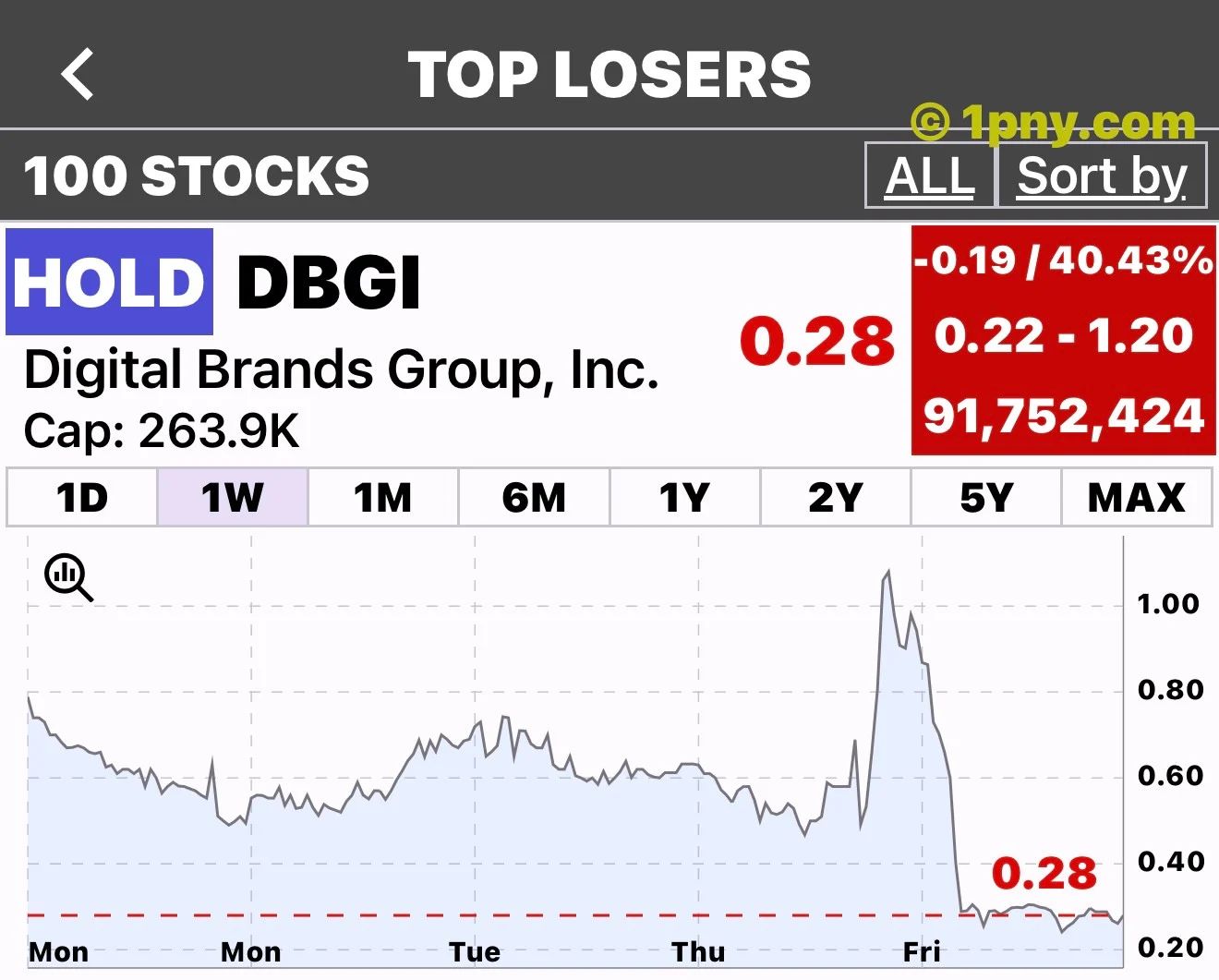
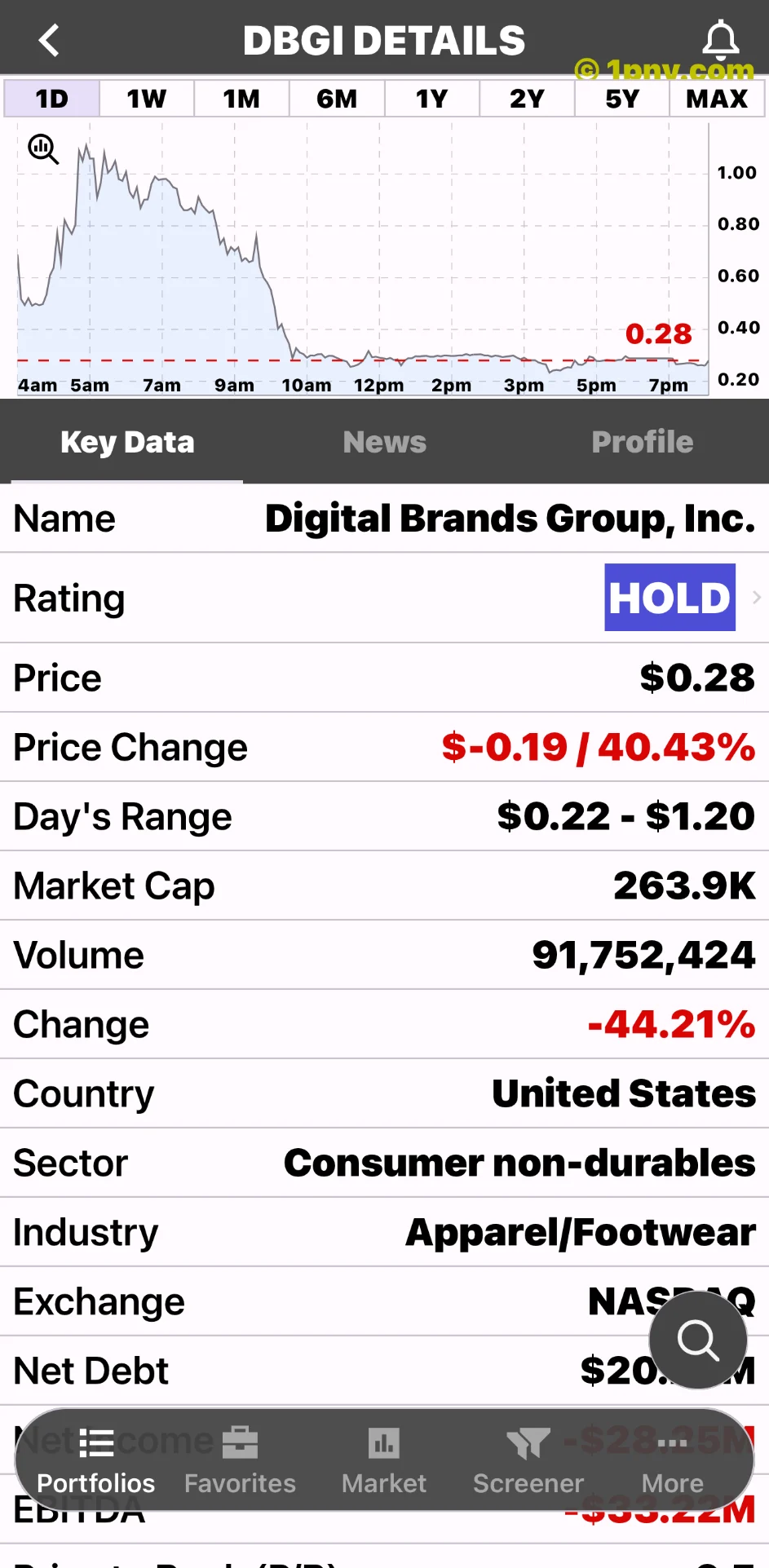
$DBGI, $0.28. The Penny Gems snapshot shows Digital Brands Group down −40.43%. A creditor dispute provides important context for the November 6, 2026 decline, but the chronology matters: the notice arrived earlier and was disclosed before Friday. The record supports attention to financing risk without turning an unresolved allegation into an established legal conclusion.
The dispute and its timing
An October 29 notice, disclosed in a November 2 filing, concerned a $3.53 million note. The creditor alleged a missed $1 million payment and a registration failure, demanding repayment at 120% plus other amounts. Digital Brands disputed certain assertions and considered resolution alternatives. This was not a newly announced November 6 default. [Digital Brands' creditor-dispute filing](https://www.sec.gov/Archives/edgar/data/1668010/000149315226049482/form8-k.htm)
For shareholders, the economic issue is how a dispute might affect cash, financing flexibility and the claims that rank ahead of common equity. Even where a company contests a demand, negotiations can create uncertainty about the resources available for running the business. The final outcome may differ substantially from a creditor's opening position, so a demand should not be treated as an agreed settlement amount.
The distinction also matters for judging the stock move. Information can remain relevant after its initial disclosure, but relevance is not proof of a specific trading cause. Our assessment is that the dispute forms a credible risk backdrop. The materials reviewed do not establish that it explains all of Friday's selling or identify the motives of particular investors.
Earlier results show why liquidity deserves attention
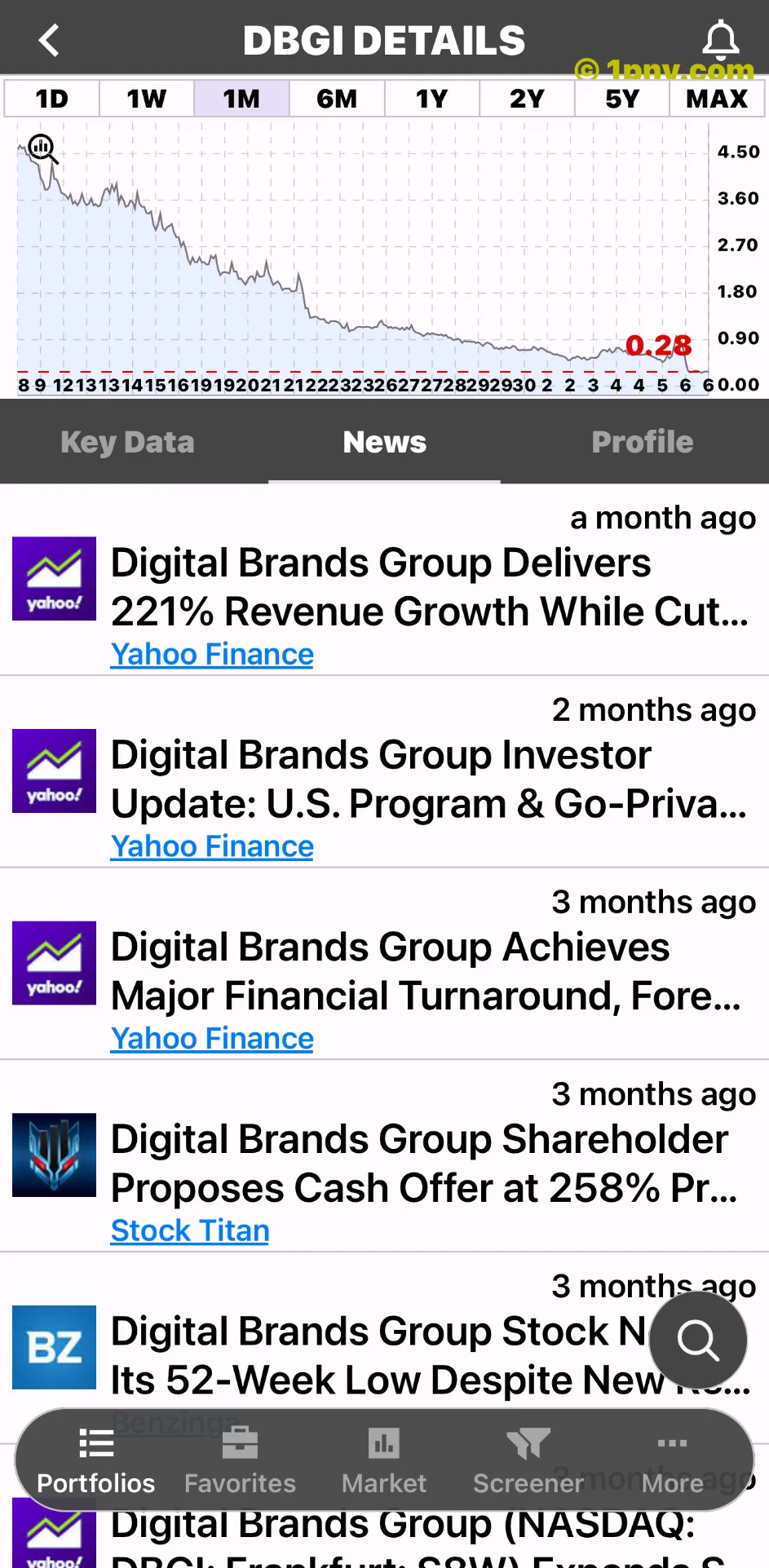
The June-quarter report recorded second-quarter revenue of approximately $1.2 million and a $9 million net loss. Operating activities consumed approximately $10.3 million of cash during the first half. These older financial results are a separate source of context, not new November 6 news or a current cash-balance estimate. [Digital Brands' second-quarter Form 10-Q](https://www.sec.gov/Archives/edgar/data/1668010/000149315226039208/form10-q.htm)
Those measures answer different questions. Revenue describes sales, net income includes accounting costs, and operating cash flow tracks cash movements associated with running the business. Comparing them helps avoid assuming that every dollar of reported loss requires an immediate dollar of new funding. It also prevents a positive sales narrative from substituting for evidence that the business can meet its obligations.
An apparel business can face a timing mismatch between paying for merchandise and collecting customer receipts. Inventory, customer demand and payment terms therefore belong in a liquidity assessment alongside debt. A refinancing might provide time without improving margins; a stronger sales period might help operations without settling a creditor dispute. Each development needs to be evaluated on its own terms.
A low share price does not measure residual value
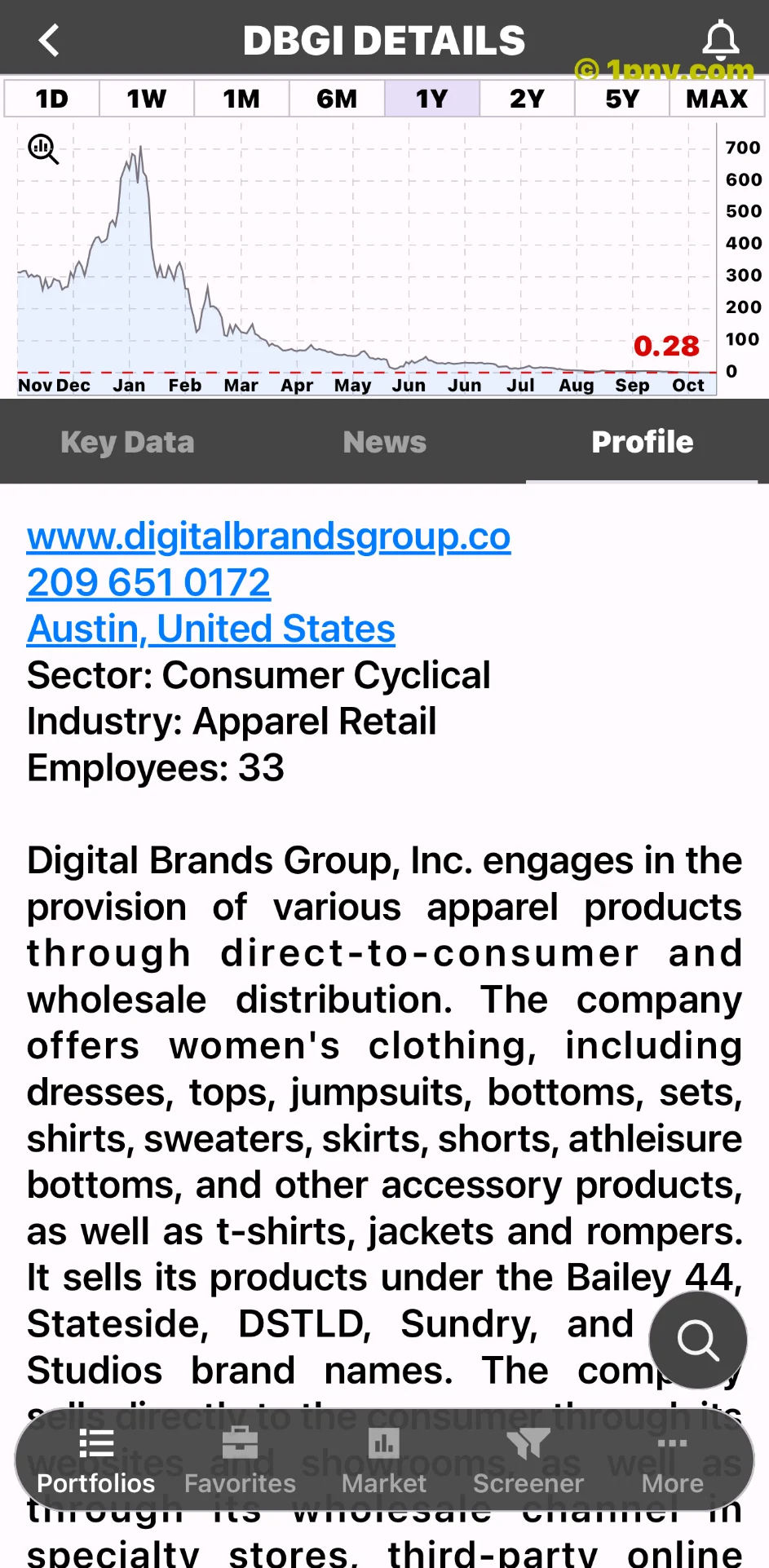
The displayed quote and percentage decline are app snapshots, not independently verified closing figures. At a low nominal price, small absolute changes can produce large percentage swings. That arithmetic says little about what the company is worth after debt, other obligations and possible future financing are considered.
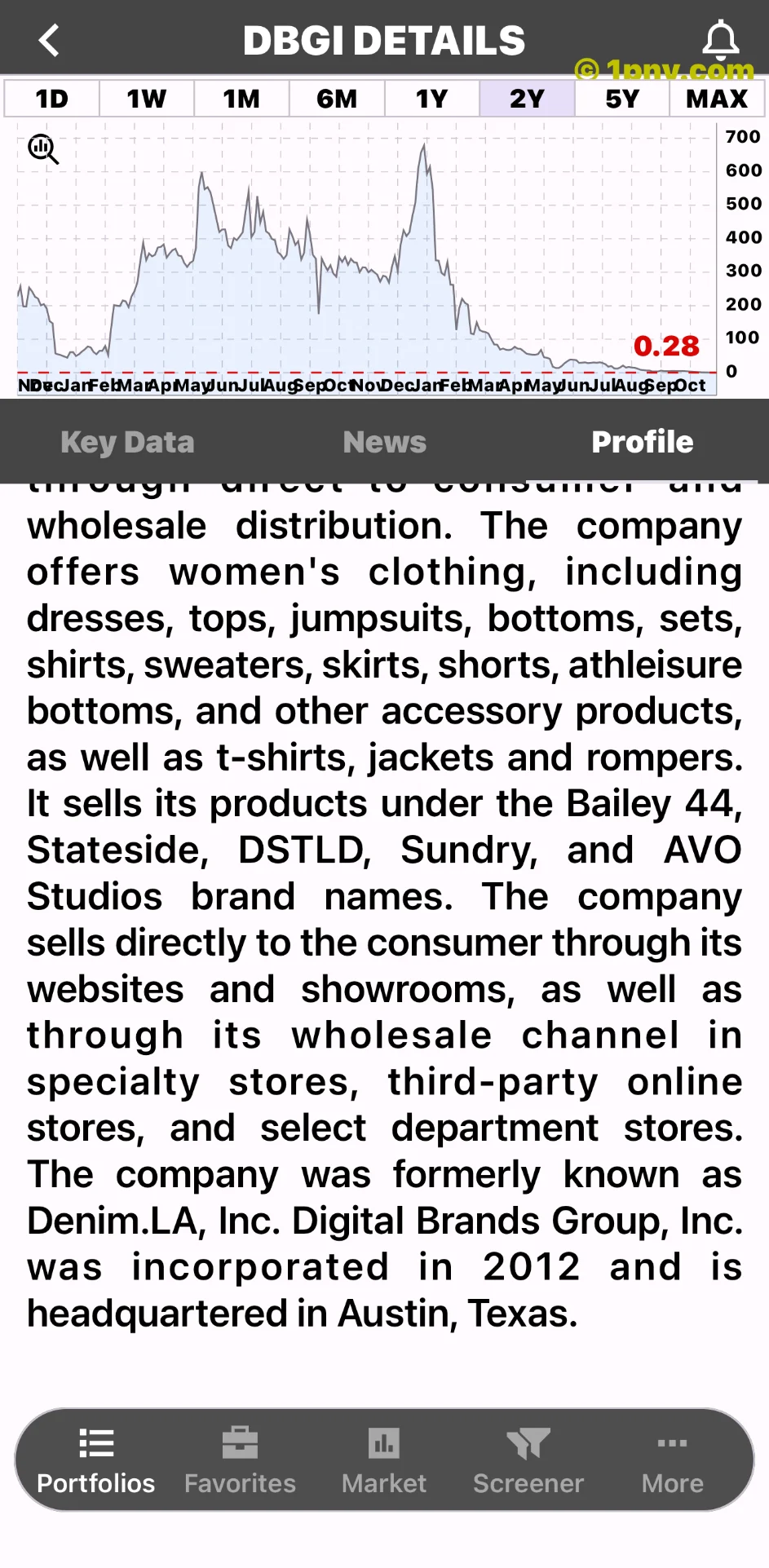
Common shareholders generally bear the residual risk after senior claims. A sensible analysis therefore begins with the full capital structure rather than multiplying an old share count by a new quote and calling the result a bargain. Changes in shares outstanding can also make comparisons with historical prices misleading if they are not adjusted consistently.
What would improve the evidence
The most useful next documents would clarify any settlement or extension, updated liquidity and the terms of new financing. Investors should distinguish signed agreements from negotiations and actual cash receipts from announced plans. Any share issuance deserves a separate assessment of its effect on existing ownership.
Penny Gems' HOLD label is the app's signal, not this article's recommendation. This November 7 review does not predict a legal outcome or promise that the decline will reverse.