
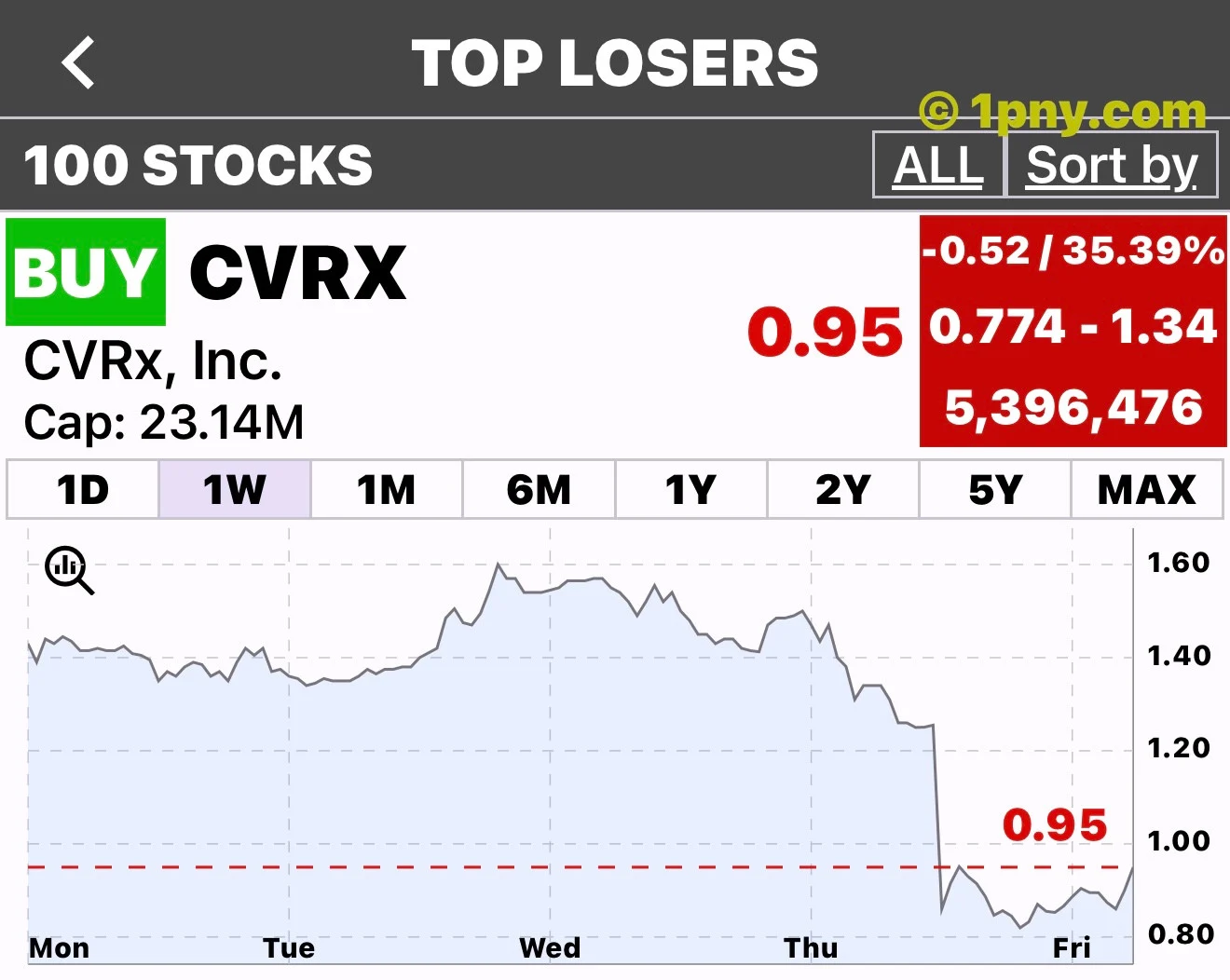
$CVRX, $0.95. Penny Gems shows a −35.39% decline in the supplied snapshot. The November 6, 2026 selloff followed an earnings update that put reimbursement and commercial execution back at the center of CVRx's investment case. The documented news offers a credible explanation for the pressure, without proving how much of the move came from any individual development.
A weaker outlook for revenue
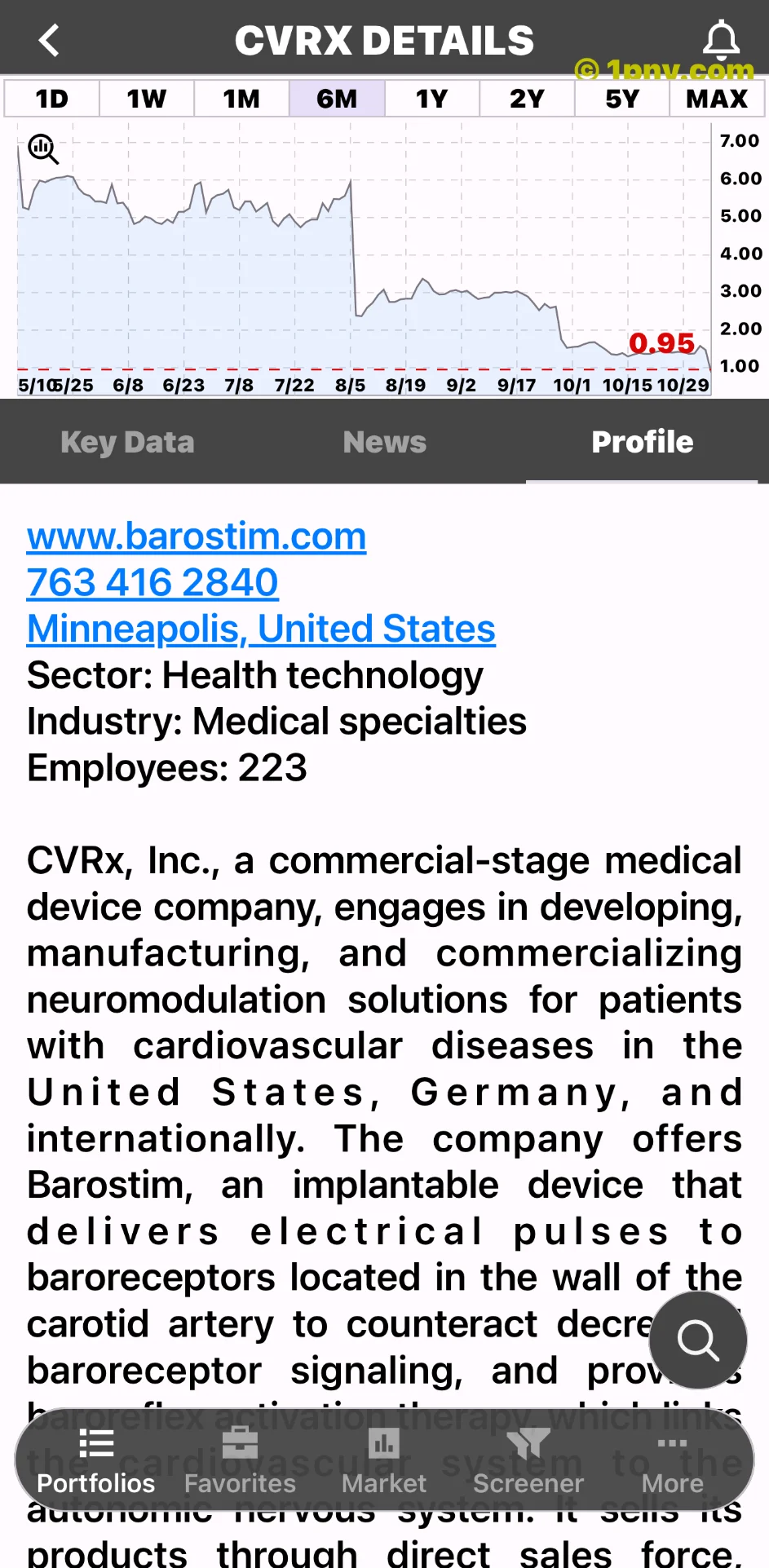
CVRx develops cardiovascular medical devices, including Barostim. Quarterly revenue was $13.8 million, down −6%, and annual guidance fell to $56–57 million from $58–60 million. Management cited lower sales-force productivity and prolonged difficulties with a major payer. Gross margin held at 87%; quarterly operating and investing cash use totaled $11 million. [CVRx's November 5 results](https://ir.cvrx.com/news-releases/news-release-details/cvrx-reports-third-quarter-2026-financial-and-operating-results)
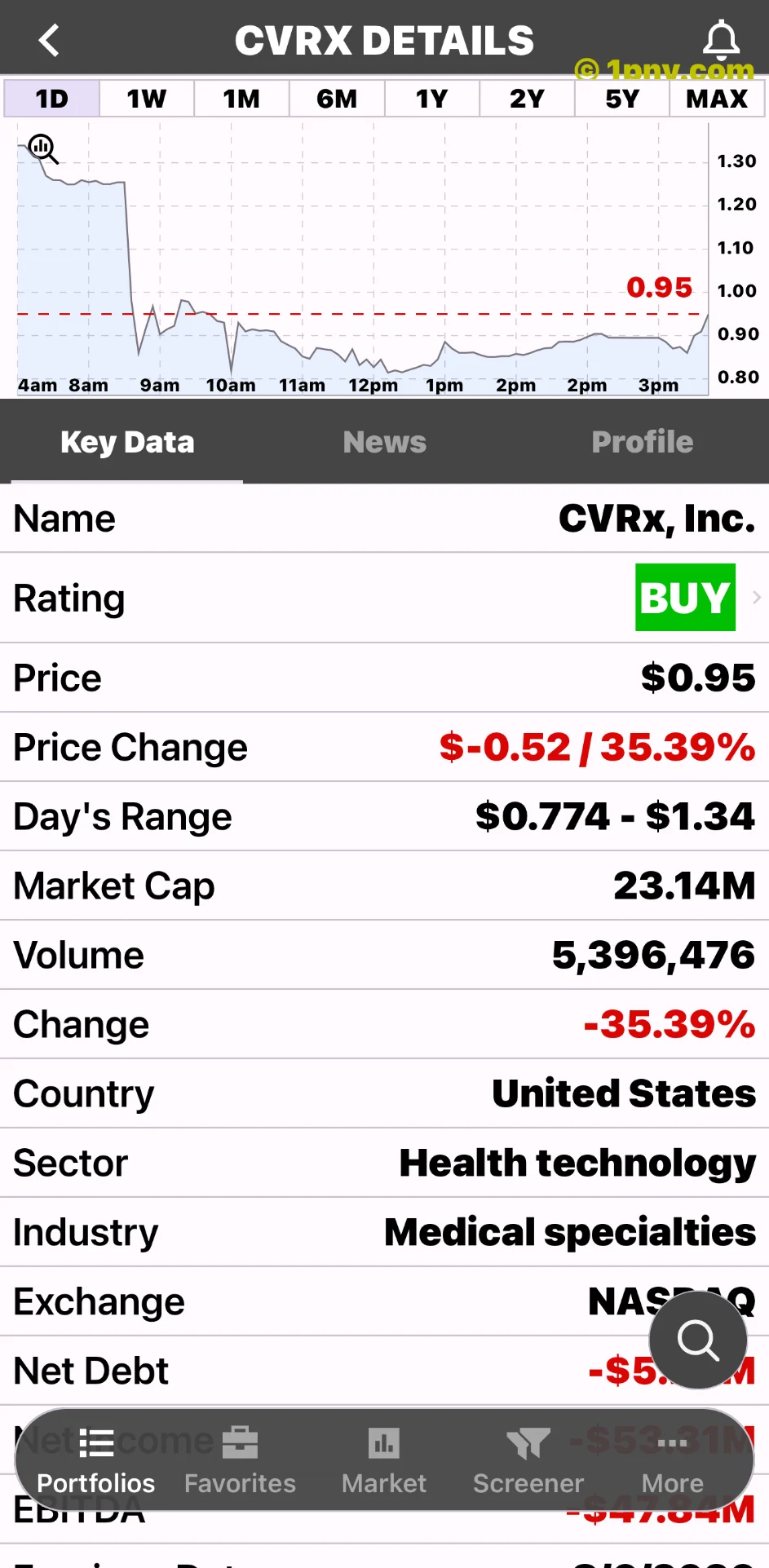
These disclosures describe a commercial problem. They do not establish that the therapy failed clinically or lost regulatory approval. For a medical-device business, potential patient demand, an approved procedure and payment authorization are different stages. Progress at one stage does not guarantee that the others will follow quickly enough to support revenue expectations.
The guidance midpoint fell from $59 million to $56.5 million, a calculated reduction of 4.24%. That is useful for measuring the change in management's expectations, but it should not be confused with the much larger share-price decline. Stocks reflect expectations about later periods, financing and risk as well as the current year's sales. There is no mechanical rule linking a guidance reduction to a particular daily return.
Analyst downgrades reinforced the concern
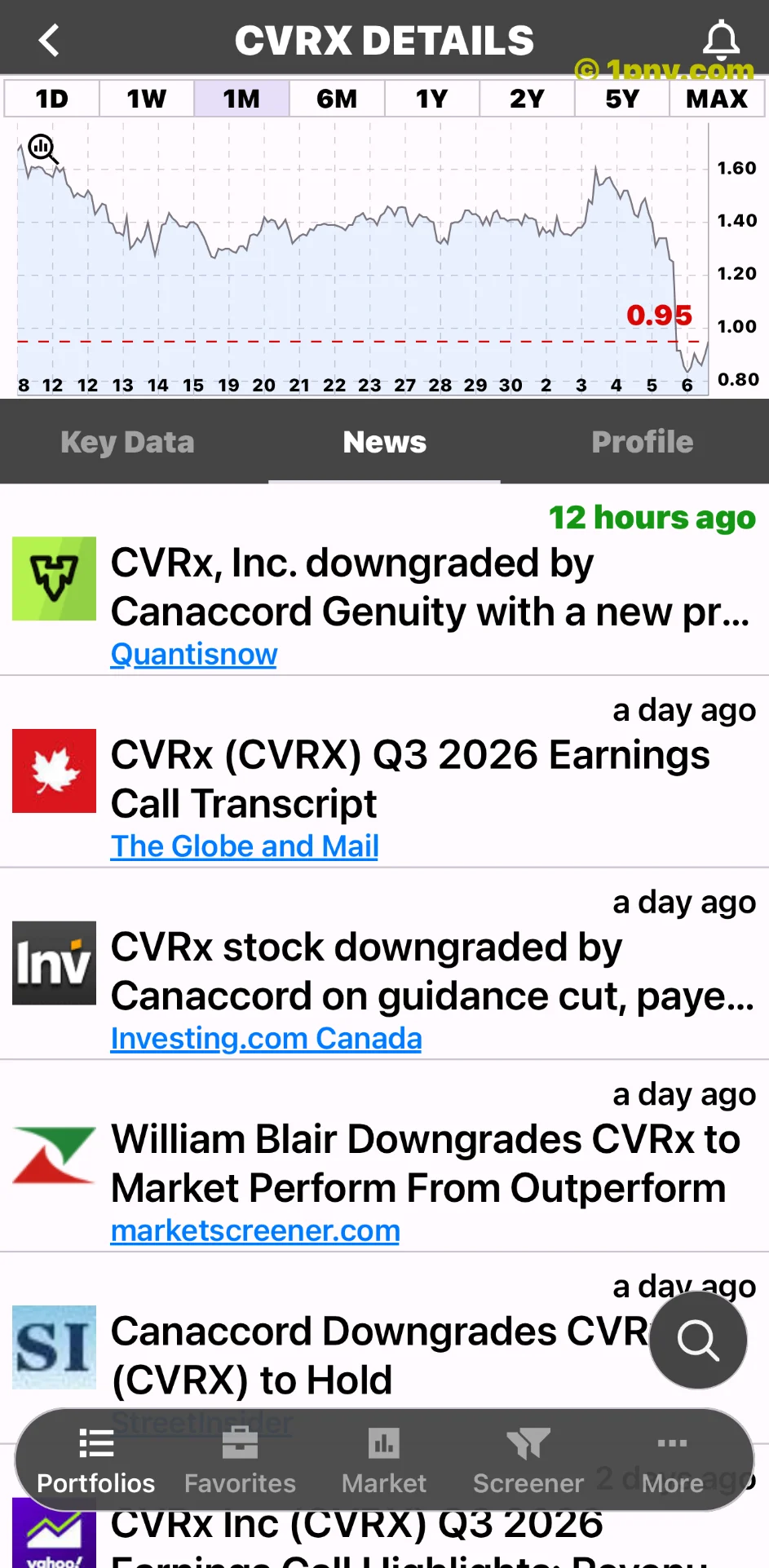
On November 6, Canaccord moved from Buy to Hold and reduced its target from $5.00 to $2.00. Its published commentary highlighted the uncertain timing of relief from commercial problems and dilution risk. [Canaccord downgrade](https://www.streetinsider.com/Analyst%2BComments/Canaccord%2BDowngrades%2BCVRx%2BInc%2B%28CVRX%29%2Bto%2BHold/27303893.html)
William Blair separately moved from Outperform to Market Perform. Reporting on that change emphasized reimbursement difficulties, physician-champion turnover and uneven sales productivity. [William Blair downgrade](https://www.investing.com/news/analyst-ratings/william-blair-downgrades-cvrx-stock-rating-on-reimbursement-headwinds-93CH-5006531)
Those changes show that analysts reassessed the business after the update. Their ratings and targets remain opinions, not promises of future prices. A target above a captured quote is not evidence that a rebound must occur. Equally, a downgrade does not quantify the contribution of analyst activity to that day's selling.
What would make a recovery more credible?
The quarterly filing reports $58.7 million in cash at September 30 and $31.9 million of operating cash use over nine months. Quarterly net loss was $14.2 million, versus $12.9 million a year earlier. Management anticipated continued significant losses. [CVRx quarterly filing](https://www.sec.gov/Archives/edgar/data/1235912/000162828026071075/cvrx-20260930.htm)
Cash provides flexibility, but a cash balance and sustainable cash generation are different measures. Operating losses also differ from cash outflows because accounting includes noncash items and timing differences. Dividing cash by a single quarter's spending would therefore produce only a simplified scenario, not a dependable financing deadline.
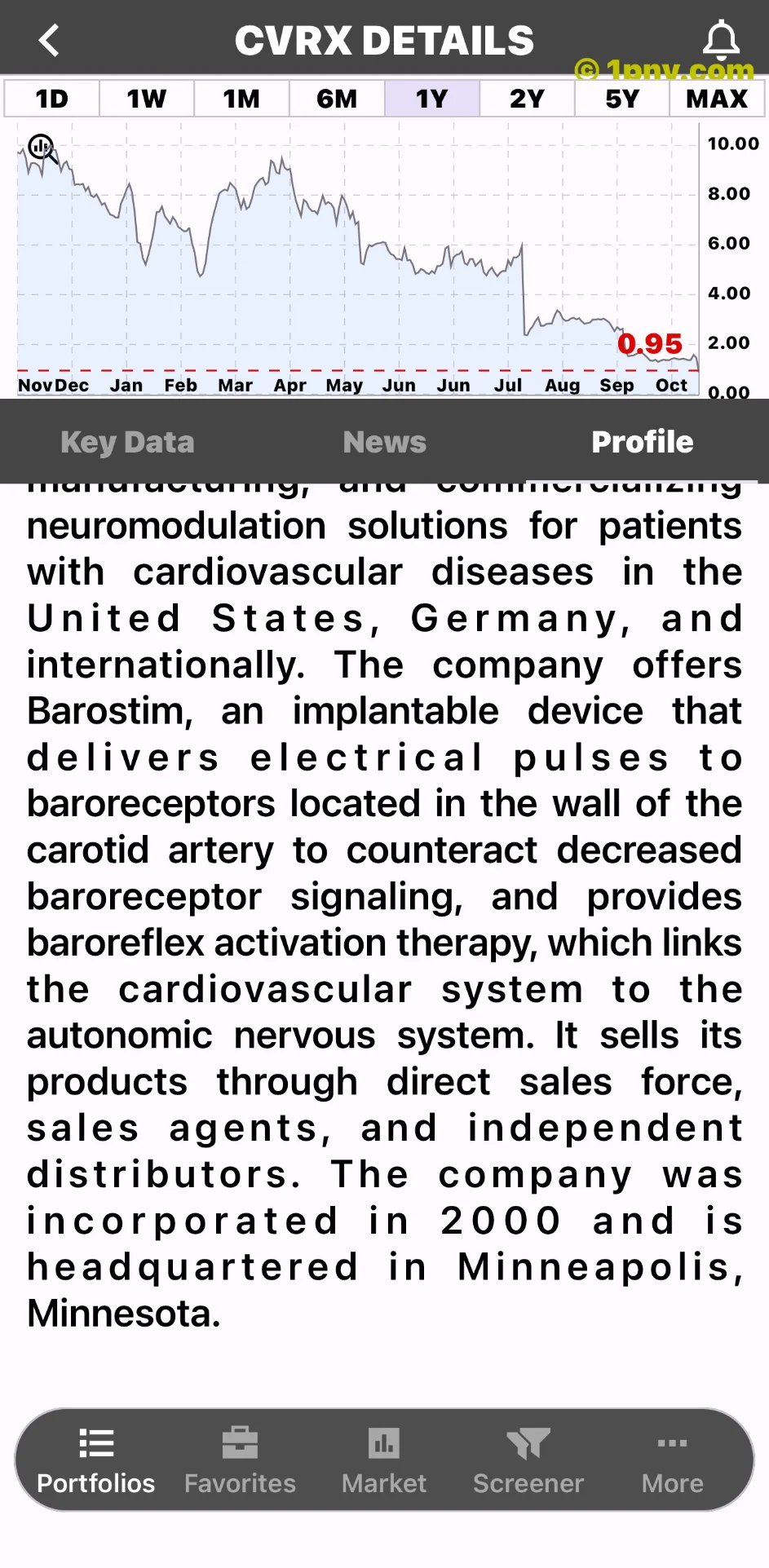
The strongest evidence of improvement would connect better authorization outcomes with completed, reimbursed procedures and more consistent commercial productivity. A recovery in sales would be more meaningful if it also reduced the need for outside funding. A high gross margin can coexist with overall losses when selling, administrative and research costs remain substantial.
Financing terms matter alongside that operating progress. New shares can fund commercialization while diluting existing ownership; new debt adds claims on future cash. Neither outcome is assumed here. Subsequent filings should establish what management actually does and on what terms. The relevant test is whether the cash raised supports durable commercial improvement, rather than simply extending the period over which operating losses continue.
The $0.95 quote and −35.39% decline remain app snapshots, not independently verified closing figures. Penny Gems' BUY label belongs to the app. This article offers analysis, not an investment recommendation or a promise of recovery.