
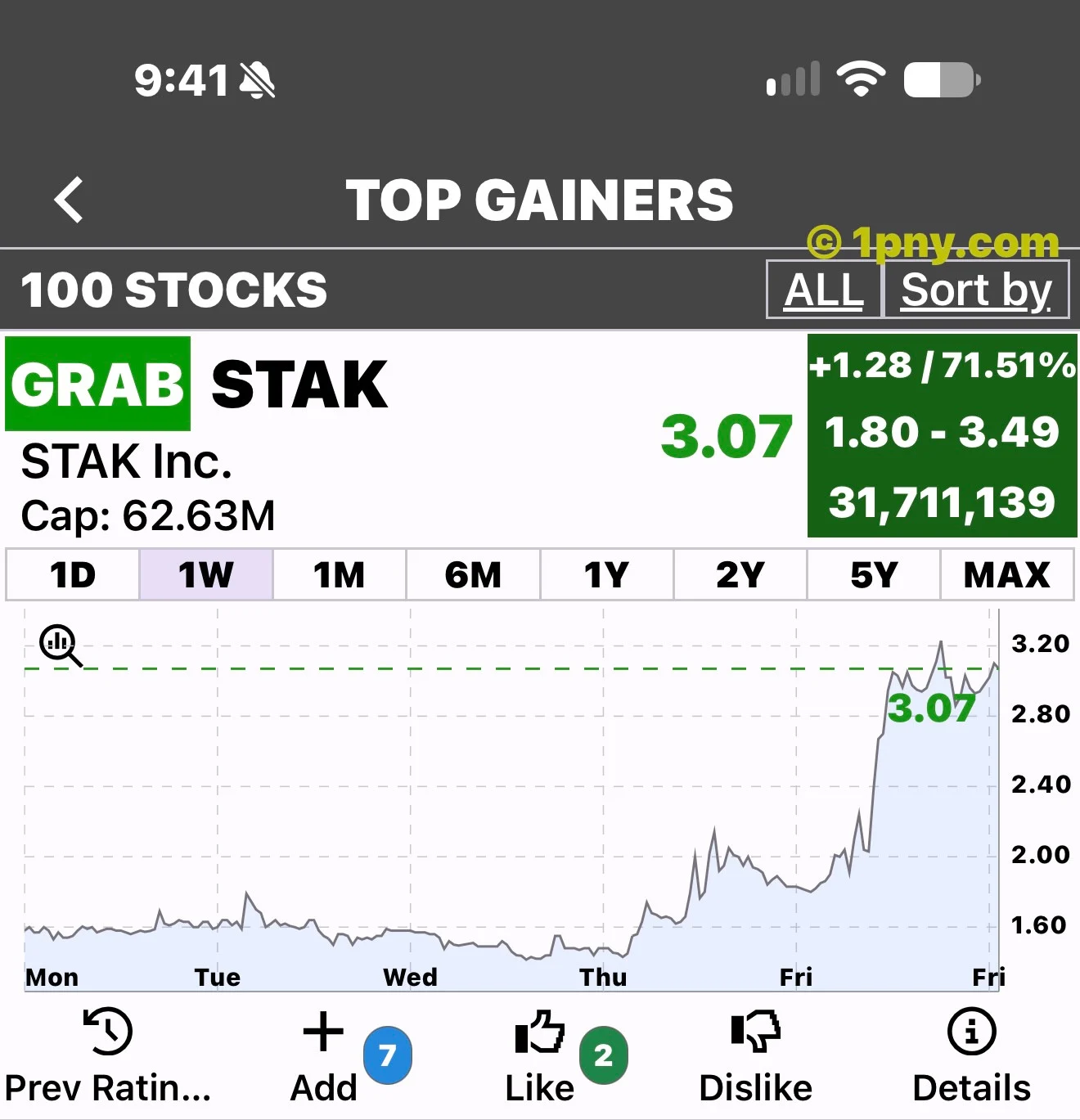
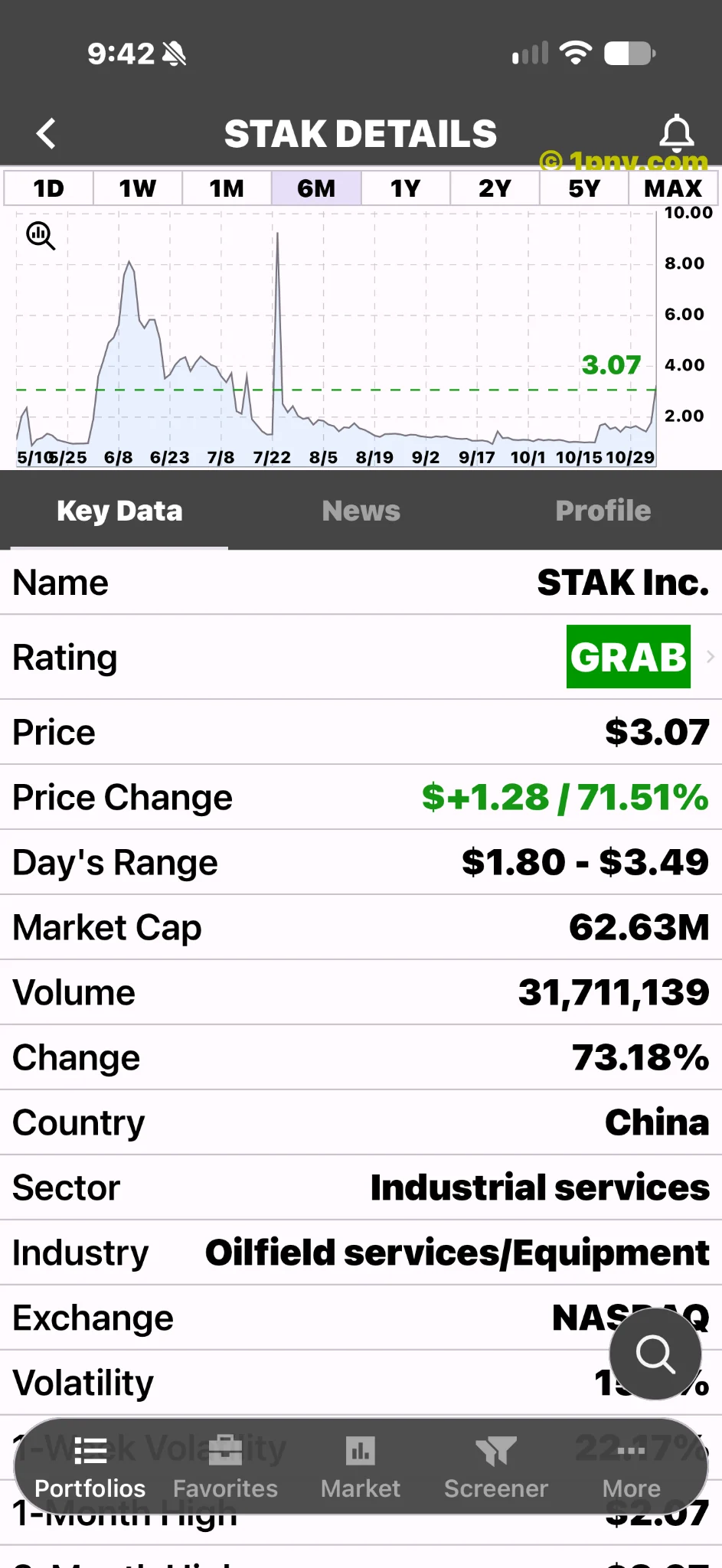
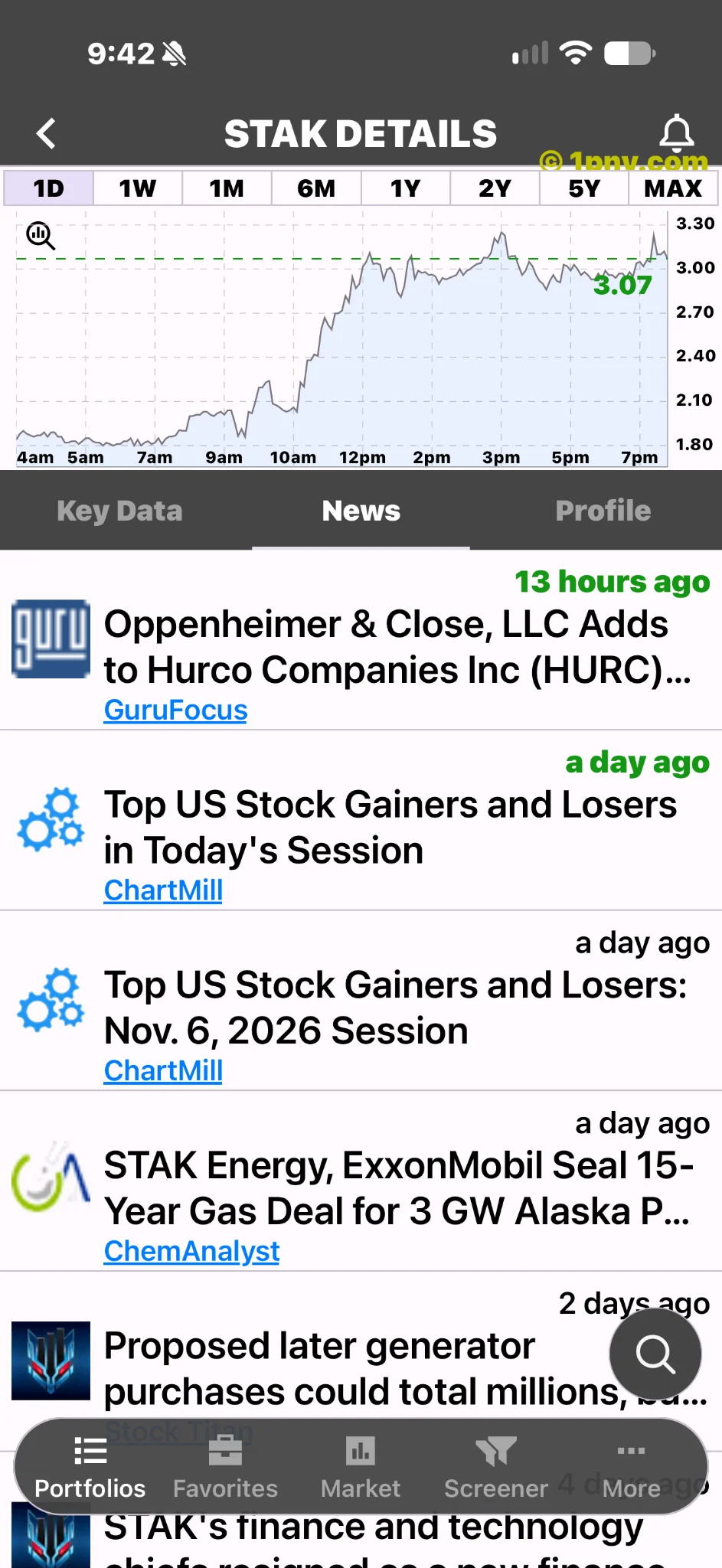
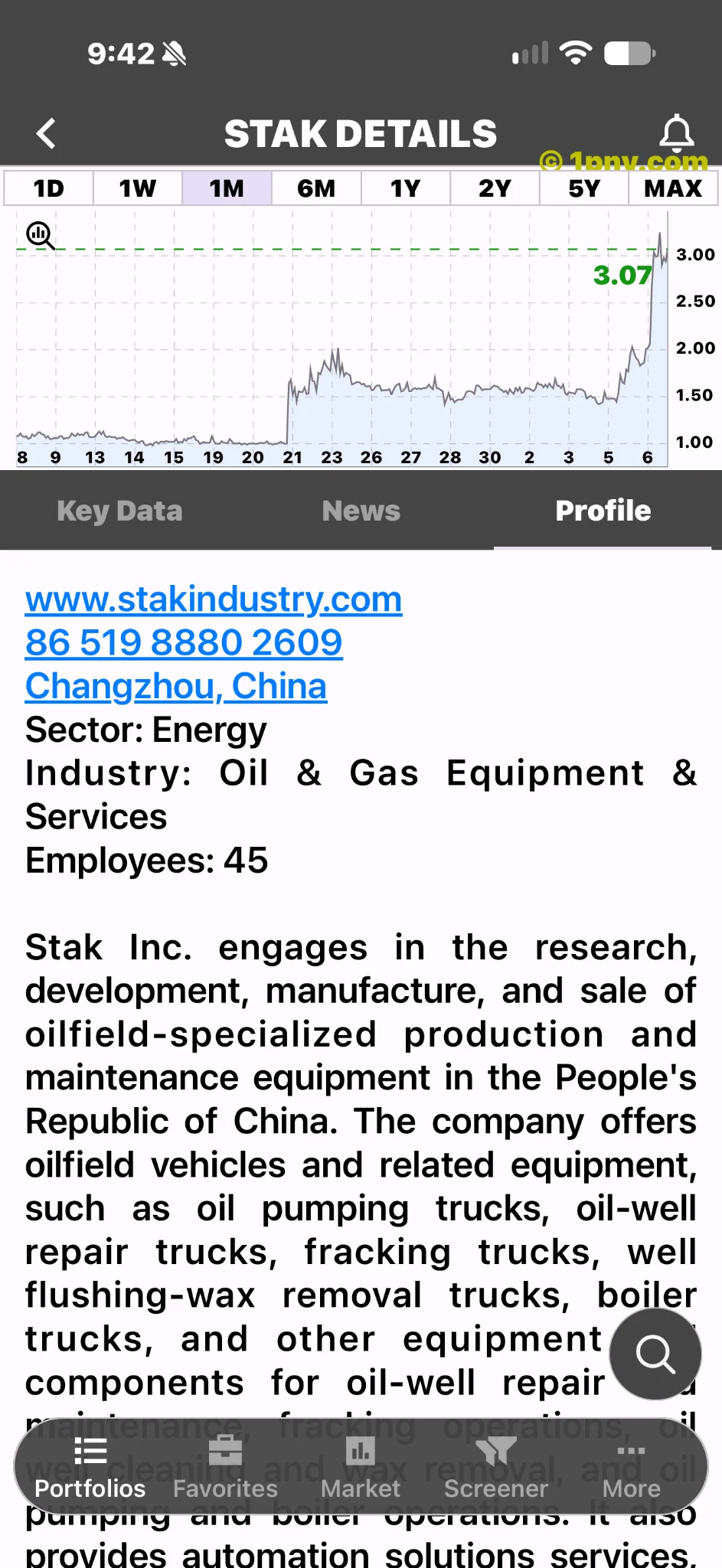
STAK’s November 6 rally followed an announcement that gave traders a new commercial possibility to evaluate: an early-stage move into gas-powered generators. Shares closed at $3.26, up +82.12%, according to historical trading data. That closing return differs from the $3.07 and +71.51% gain displayed in the supplied Penny Gems screenshot. The screenshot is a separate market snapshot, not the regular-session closing record.
A commercial opening, with important conditions
The company announced a nonbinding generator-procurement letter of intent on November 5. It described an initial potential transaction worth hundreds of thousands of dollars and possible subsequent purchases worth millions. Definitive contracts remain necessary, and later purchases depend on initial delivery and acceptance. The company explicitly cautioned that these amounts are not confirmed orders or revenue forecasts.
The announcement is a plausible catalyst for the next day’s buying. It does not establish the motives of every trader, or show how much of the price change came from longer-term investors rather than short-term positioning. A stock can respond strongly to a change in perceived opportunity before that opportunity contributes anything to the income statement.
How to evaluate an early-stage agreement
The useful question is what has become more certain. An expression of commercial interest can be meaningful because it gives a proposed business direction a potential customer pathway. Its value still depends on the distance between preliminary discussions and an enforceable purchase commitment.
That distance should shape how investors read the announcement. A possible transaction size describes an opportunity under discussion. It should not be inserted into a revenue model as though the customer had already placed an irrevocable order. A model that includes it should identify the assumptions about probability, timing and completion rather than hide those assumptions inside a single growth estimate.
The same discipline applies to successive phases. An initial transaction, if completed, might help demonstrate a product’s usefulness. It does not automatically establish a recurring purchasing pattern. Investors should look for evidence that each additional phase has progressed beyond a possibility before assigning it the same weight as contracted business.
Revenue, profit and cash are different milestones
Even a signed order would leave additional questions. Investors would need to understand the delivery schedule, payment terms, production costs and any acceptance requirements. Those details determine when a commercial opportunity can turn into recorded sales and whether the sales produce an attractive margin.
Cash collection is a separate test. Growth that requires substantial spending before customers pay can create financing demands even when the eventual transaction appears profitable. This is a general business consideration, not a claim that STAK has disclosed a particular funding shortfall for this proposal.
What would make the next update more informative
A definitive agreement would improve visibility. Disclosed quantities, delivery milestones and customer acceptance would provide further evidence. Eventually, financial statements showing revenue, related expenses and cash receipts would allow investors to assess the economics rather than only the potential headline value.
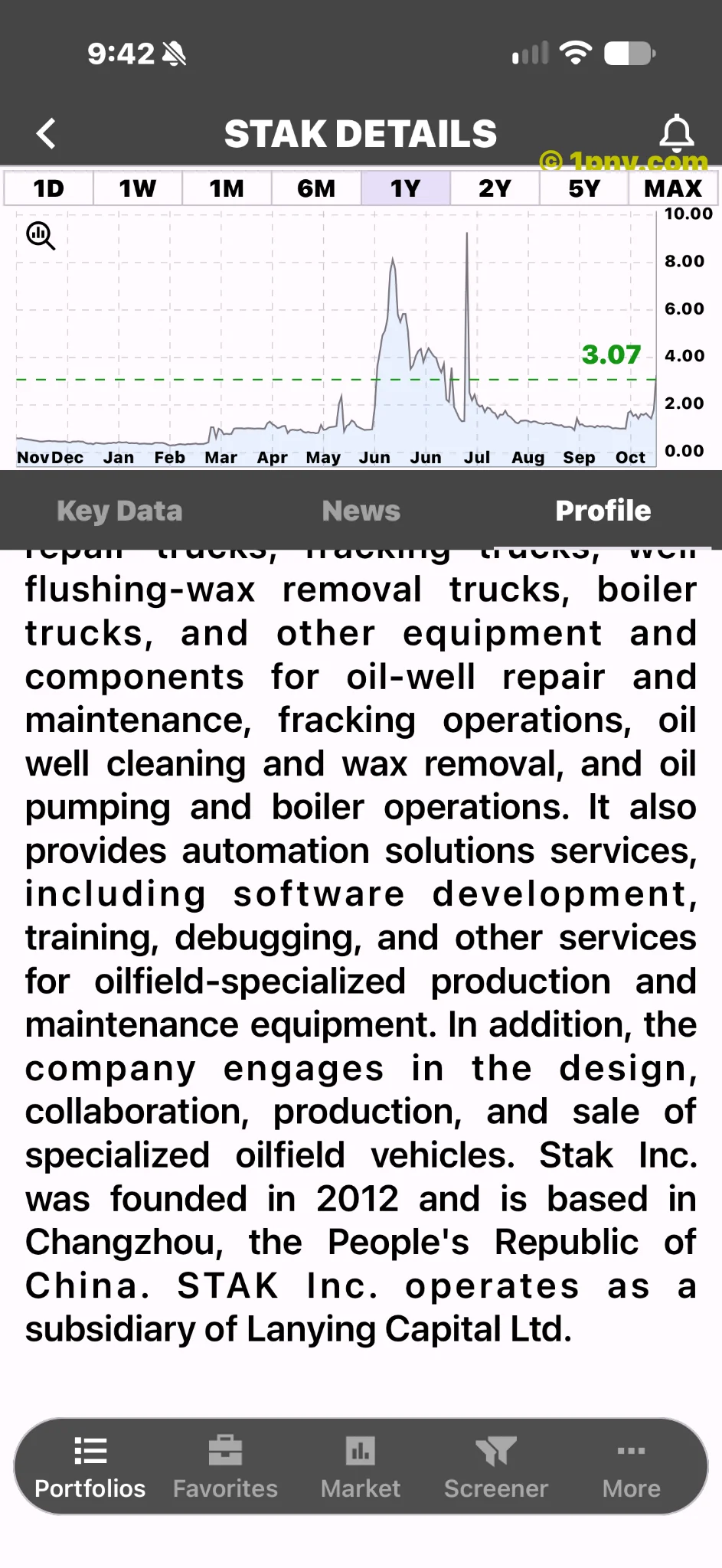
Until then, the responsible explanation for the rally is that a new generator-business opportunity drew attention while major commercial steps remained outstanding. The share-price gain measures the market’s response; it does not measure the amount of business already secured.
Investors should also verify company identity when reading related headlines. A similar corporate name is insufficient evidence that a transaction belongs to Nasdaq-listed STAK Inc. The generator announcement discussed here is the relevant disclosure, and unrelated companies’ agreements should not be folded into its investment story.
This article is market commentary for educational purposes, not a recommendation to buy or sell a security.